
Table of Contents
ToggleIntroduction:
In the filed of academic writing, compare and contrast essays hold a significant place as they not only refine critical thinking skills but also demonstrate the writer’s ability to analyze two or more subjects in-depth. However, the journey towards crafting a compelling compare and contrast essay begins with selecting appropriate paper topics. This task, though seemingly straightforward, demands careful consideration to ensure the chosen subjects facilitate meaningful comparisons and offer insightful contrasts. This essay looks into the complex process of choosing the right paper topics for a compare and contrast essay, providing guidance and strategies to navigate this crucial step effectively.
Understanding the Essence of Compare and Contrast Essays:
Before looking into the selection process, it’s imperative to understand the essence of compare and contrast essays. These essays involve examining the similarities and differences between two or more subjects within a specific framework or context. The objective is not basically to list similarities and differences but to look deeper into the underlying significance, implications, and nuances of these aspects. Consequently, choosing suitable paper topics requires identifying subjects that offer substantial material for comparison while allowing for meaningful exploration of contrasting elements.
Factors to Consider When Choosing Paper Topics:
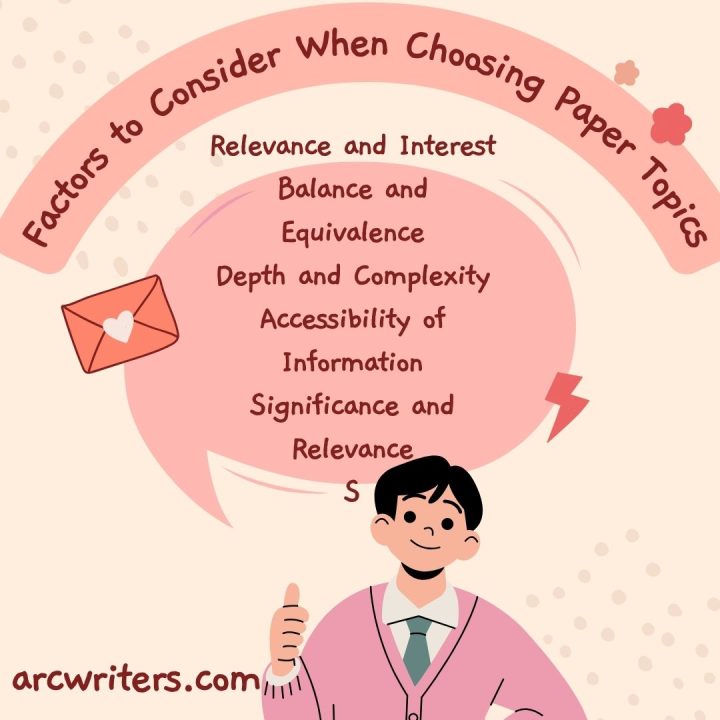
Factors to Consider When Choosing Paper Topics:
- Relevance and Interest: The chosen topics should be relevant to the course or assignment requirements, ensuring alignment with the learning objectives. Additionally, selecting subjects that personally interest the writer can enhance motivation and engagement throughout the research and writing process.
- Balance and Equivalence: Opting for subjects that possess a balance of similarities and differences is crucial for maintaining equilibrium in the essay. Ensuring equivalence between the subjects prevents bias and facilitates a fair comparison, thereby enhancing the credibility of the analysis.
- Depth and Complexity: Complex topics that offer layers of analysis and interpretation are ideal for compare and contrast essays. Selecting subjects with depth allows for a comprehensive exploration of various facets, fostering nuanced discussions and insights.
- Accessibility of Information: Availability of credible and comprehensive sources is essential for conducting thorough research on the chosen topics. Prioritize subjects for which ample information is accessible, ensuring sufficient material to support the comparative analysis.
- Significance and Relevance: Opt for topics that hold significance and relevance within the broader academic or real-world context. Choosing subjects with inherent importance not only enriches the discussion but also demonstrates the essay’s relevance and applicability beyond the confines of academia.
Strategies for Choosing Paper Topics:
- Brainstorming and Mind Mapping: Initiate the topic selection process by brainstorming ideas and creating mind maps to visualize potential subjects and their interconnections. Encourage free-flowing ideation, allowing for the exploration of diverse themes and concepts.
- Narrowing Down Options: Evaluate the brainstormed ideas based on the aforementioned factors, gradually narrowing down the options to a manageable list of potential topics. Consider the feasibility of each topic in terms of research scope, available resources, and personal interest.
- Conducting Preliminary Research: Conduct preliminary research on the shortlisted topics to assess the availability and quality of relevant sources. Evaluate the depth of existing literature, the diversity of perspectives, and the scope for original analysis and insights.
- Consultation and Feedback: Seek input from peers, instructors, or academic advisors regarding the viability and suitability of the chosen topics. Engaging in discussions and receiving feedback can offer valuable perspectives and identify potential blind spots or overlooked aspects.
- Flexibility and Adaptability: Remain open to refining or modifying the chosen topics based on new insights, emerging trends, or feedback received during the research process. Flexibility is essential for accommodating unforeseen challenges and optimizing the essay’s overall quality and impact.
Examples of Effective Paper Topics:
- A Comparative Analysis of Eastern and Western Philosophical Traditions: Exploring Notions of Selfhood and Existence
- Contrasting Approaches to Environmental Conservation: Policies and Practices in Developed vs. Developing Nations
- The Evolution of Democratic Governance: A Comparative Study of Ancient Greek Democracy and Modern Representative Democracy
- Exploring Cultural Diversity: A Comparative Examination of Traditional Festivals in Different Cultures
- Comparative Analysis of Healthcare Systems: Universal Healthcare vs. Privatized Healthcare Models
Conclusion:
Choosing the right paper topics for a compare and contrast essay is a crucial step that sets the foundation for a successful and impactful academic endeavor. By considering factors such as relevance, balance, depth, accessibility, and significance, writers can navigate this process effectively and select subjects that foster insightful comparisons and contrasts. Employing strategies such as brainstorming, preliminary research, consultation, and flexibility enhances the likelihood of identifying compelling topics that facilitate meaningful analysis and contribute to scholarly discourse. Ultimately, the chosen topics serve as the canvas upon which writers paint a rich tapestry of comparative insights, enriching understanding and fostering intellectual growth.
