
Introduction:
Crafting a personal statement is an essential step in various aspects of life, whether it’s for college admissions, job applications, or scholarship opportunities. However, many individuals struggle with structuring their personal statements effectively, often resulting in disjointed narratives and unclear messages. One of the most crucial tools for overcoming this challenge is developing a well-organized outline. An outline serves as the blueprint for your personal statement, ensuring coherence, flow, and clarity of thought. In this comprehensive guide, we will explore the processof crafting such an outline, equipping you with the skills to articulate your story effectively and leave a lasting impression on your audience.
I. Understanding the Purpose of Your Personal Statement:
Before looking into the outline creation process, it’s crucial to understand the purpose of your personal statement. Whether you’re applying for a university program, a job, or a scholarship, your personal statement serves as an opportunity to showcase your unique qualities, experiences, and aspirations. It provides admissions committees or hiring managers with insight into who you are beyond your academic or professional achievements. Therefore, the outline must align with the overarching goal of conveying your story authentically and persuasively.
II. Identifying Key Themes and Messages:
The first step in crafting your outline is identifying the key themes and messages you want to convey in your personal statement. Reflect on your experiences, values, and goals to determine the central ideas that define your identity and aspirations. These themes will serve as the foundation upon which your outline is built, guiding the structure and content of your personal statement.
III. Structuring Your Outline:
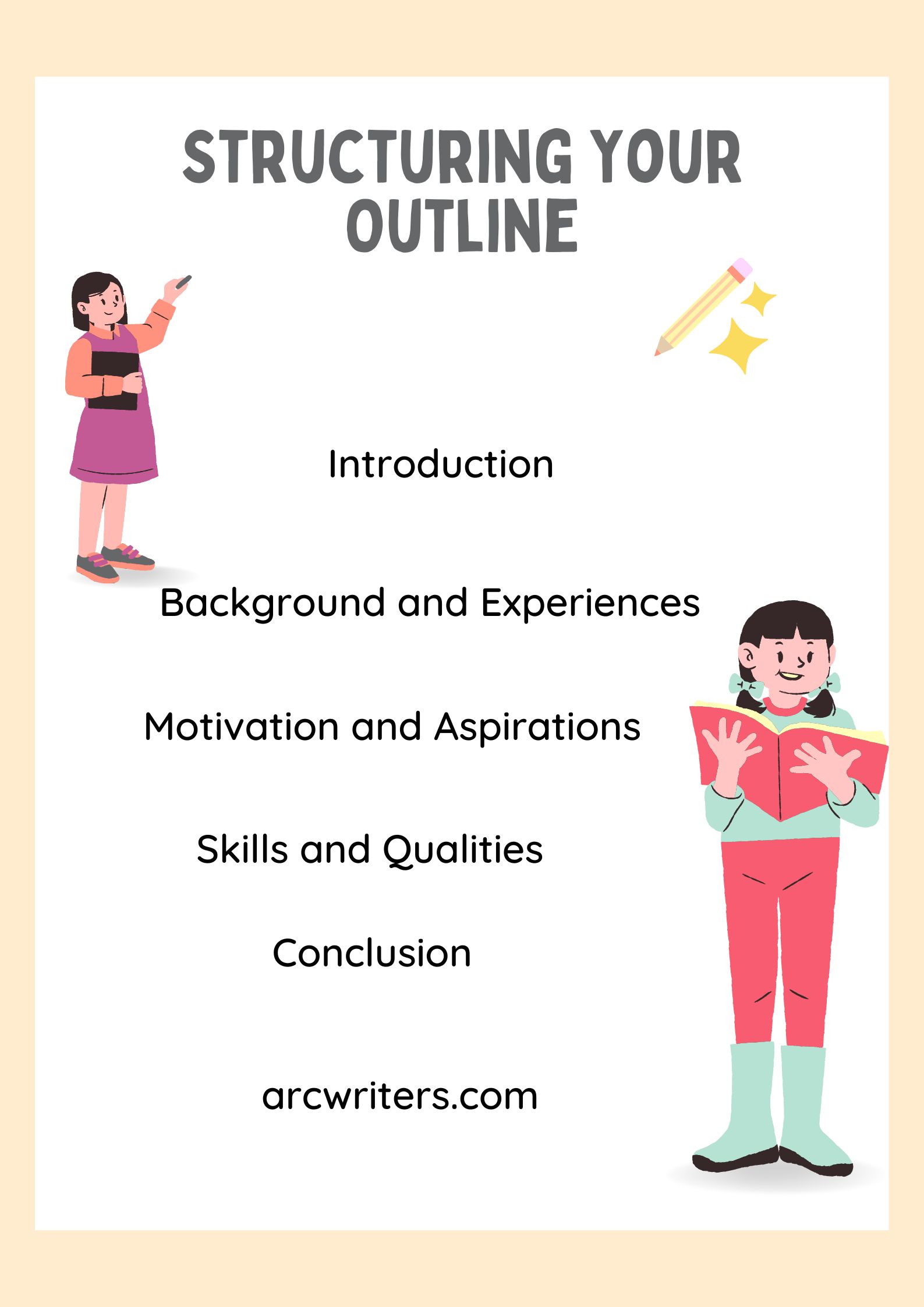
Structuring your outline
A well-organized outline typically consists of several key sections, each serving a specific purpose in conveying your story cohesively. While the specific structure may vary depending on the requirements of your personal statement, the following elements are commonly included:
- Introduction:
- Hook: Capture the reader’s attention with an engaging opening statement or anecdote that sets the tone for your personal statement.
- Thesis Statement: Clearly state the overarching theme or message you aim to communicate through your personal statement.
- Background and Experiences:
- Personal Background: Provide relevant background information about yourself, including your upbringing, cultural identity, and significant life experiences.
- Academic and Professional Achievements: Highlight any academic accomplishments, extracurricular activities, or professional experiences that have shaped your journey and influenced your aspirations.
- Motivation and Aspirations:
- Career Goals: Articulate your long-term career goals and aspirations, demonstrating how your past experiences have informed your future ambitions.
- Motivation for Application: Explain why you are passionate about pursuing the opportunity for which you are applying and how it aligns with your personal and professional objectives.
- Skills and Qualities:
- Key Skills and Attributes: Showcase your relevant skills, strengths, and personal qualities that make you a well-suited candidate for the opportunity.
- Leadership and Teamwork: Provide examples of instances where you have demonstrated leadership abilities, teamwork skills, and adaptability in various contexts.
- Conclusion:
- Summary of Key Points: Recapitulate the main themes and messages presented in your personal statement, reinforcing your candidacy and leaving a lasting impression on the reader.
- Closing Statement: End on a strong note with a compelling closing statement that reaffirms your enthusiasm for the opportunity and gratitude for the reader’s consideration.
IV. Integrating Coherence and Flow:
Once you have outlined the key sections of your personal statement, it’s essential to ensure coherence and flow between them. Cohesion in your narrative enhances readability and comprehension, allowing the reader to follow your story effortlessly. To achieve this:
- Transition Smoothly: Use transitional phrases and sentences to connect each section of your outline seamlessly. Transition words such as “moreover,” “furthermore,” and “conversely” help bridge the gap between ideas and maintain the flow of your narrative.
- Maintain Consistency: Ensure consistency in tone, style, and voice throughout your personal statement. A cohesive narrative reflects a unified sense of purpose and identity, reinforcing the credibility of your story.
- Avoid Repetition: While it’s essential to reinforce key themes and messages, avoid unnecessary repetition of information. Streamline your narrative by eliminating redundant details and focusing on presenting a concise yet comprehensive account of your experiences and aspirations.
V. Seeking Feedback and Revision:
Once you have drafted your outline, seek feedback from trusted mentors, peers, or advisors who can provide constructive criticism and suggestions for improvement. Revise your outline based on their feedback, paying attention to areas where clarity, coherence, or relevance may be lacking. Iterative refinement is key to creating a polished and compelling personal statement outline that effectively communicates your story.
VI. Conclusion:
Crafting a well-organized outline for your personal statement is a critical step in articulating your story with clarity, coherence, and flow. By understanding the purpose of your personal statement, identifying key themes and messages, structuring your outline effectively, integrating coherence and flow, and seeking feedback for revision, you can create a compelling narrative that captivates your audience and distinguishes you as a standout candidate. Remember, your personal statement is an opportunity to showcase your unique qualities, experiences, and aspirations—make it count.
