
Introduction:
Criticism, as an art form, entails a meticulous examination and evaluation of literary works. It serves as a lens through which we analyze the nuances, strengths, and weaknesses of creative expressions. However, a mere superficial scrutiny often falls short in capturing the essence of a work. To truly appreciate and critique a piece of literature, one must delve into the realm of poetic devices and elements. These tools, ranging from metaphor and simile to imagery and tone, imbue texts with layers of meaning, inviting readers to explore the depths of artistic expression. In this essay, we embark on a journey to explore how the judicious application of poetic devices and elements enriches the process of criticism.
I. Understanding Poetic Devices:
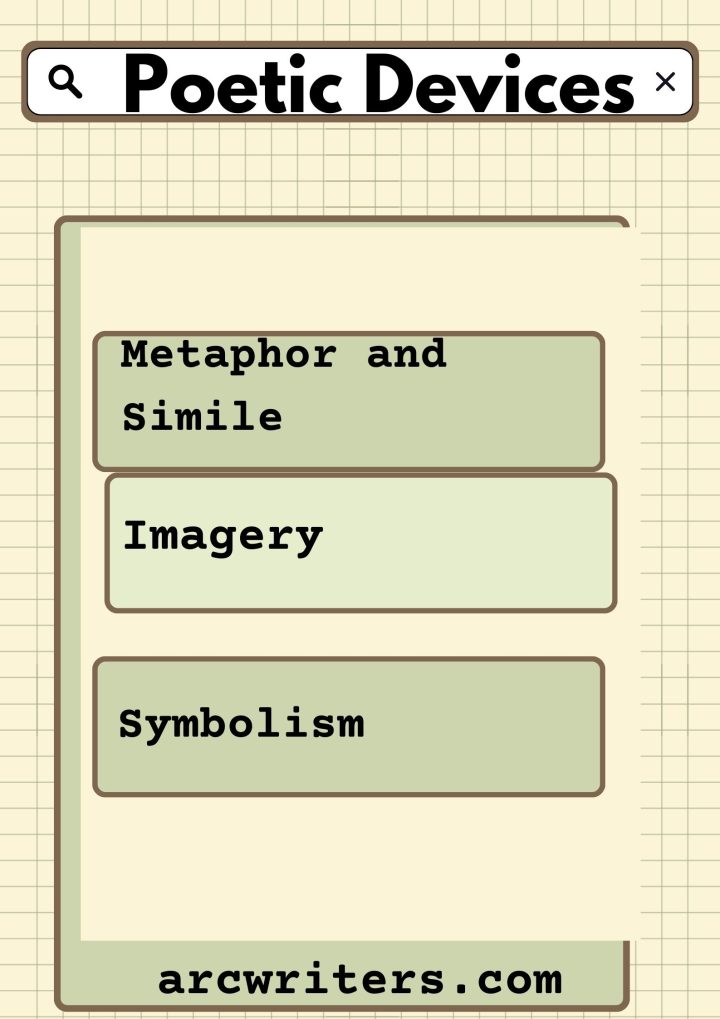
Poetic Devices
Metaphor and Simile:
Metaphor and simile are rhetorical devices that establish connections between seemingly disparate concepts, revealing deeper layers of meaning within a poem. Metaphors assert direct comparisons between two unlike things, while similes use “like” or “as” to draw parallels. These devices invite readers to interpret poetry on multiple levels, uncovering symbolic associations and thematic insights. In the realm of criticism, the analysis of metaphor and simile enables scholars to decipher the underlying messages of a poem and evaluate its effectiveness in conveying complex ideas.
Imagery
Imagery is a cornerstone of poetry, allowing poets to paint vivid pictures in the minds of readers. Through the use of sensory details, such as sight, sound, taste, touch, and smell, poets create immersive experiences that resonate with their audience. In the realm of criticism, imagery serves as a powerful tool for analyzing the effectiveness of a poem’s descriptive language. By evaluating the clarity, precision, and evocativeness of imagery, critics can assess the poem’s ability to engage the reader’s imagination and evoke emotional responses.
Example: In “The Great Gatsby” by F. Scott Fitzgerald, the recurring imagery of the green light symbolizes Gatsby’s aspirations and the elusive nature of the American Dream.
Symbolism:
Symbolism imbues objects, actions, and elements of nature with deeper significance, enriching the thematic resonance of poetry. Whether through conventional symbols like the rose or more abstract representations, such as light and darkness, poets employ symbolism to imbue their work with layers of meaning. Critics engage with symbolism to uncover the allegorical, cultural, and historical contexts that shape a poem’s interpretation. By unraveling the symbolic tapestry woven by the poet, critics gain insight into the thematic concerns and philosophical inquiries embedded within the text.
Example: The mockingbird in Harper Lee’s “To Kill a Mockingbird” symbolizes innocence and the unjust persecution of the innocent.
II. Elements of Poetic Structure:
Rhyme and Rhythm:
Sound devices, such as rhyme, rhythm, alliteration, and assonance, infuse poetry with musicality and cadence. These devices create patterns of repetition and variation that contribute to the poem’s aesthetic appeal and emotional impact. In the realm of criticism, the analysis of sound devices allows scholars to assess the poem’s sonic qualities and explore how they enhance its thematic coherence and emotional resonance. By examining the interplay of sounds within a poem, critics uncover the poet’s deliberate choices and their implications for the work as a whole.
Example: The use of iambic pentameter in Shakespeare’s plays not only enhances the theatricality of the dialogue but also underscores the emotional intensity of the characters’ speeches.
Tone and Mood:
The structure and form of a poem dictate its organization and presentation, influencing the reader’s interpretation and emotional response. Whether adhering to traditional forms like sonnets and villanelles or experimenting with free verse and prose poetry, poets make deliberate choices about structure to convey their intended message. Critics analyze the relationship between form and content, examining how the poem’s structure shapes its meaning and thematic development. By exploring the interplay of form and content, critics gain insight into the poet’s aesthetic objectives and stylistic innovations.
Example: In Edgar Allan Poe’s “The Tell-Tale Heart,” the narrator’s unreliable tone creates a sense of unease and suspense, contributing to the story’s chilling atmosphere.
Structure and Form:
The structure and form of a poem dictate its organization and presentation, influencing the reader’s interpretation and emotional response. Whether adhering to traditional forms like sonnets and villanelles or experimenting with free verse and prose poetry, poets make deliberate choices about structure to convey their intended message. Critics analyze the relationship between form and content, examining how the poem’s structure shapes its meaning and thematic development. By exploring the interplay of form and content, critics gain insight into the poet’s aesthetic objectives and stylistic innovations.
Example: The fragmented structure of T.S. Eliot’s “The Waste Land” mirrors the disintegration of traditional values in the aftermath of World War I, inviting readers to contemplate the fragmented nature of modern existence.
III. Applying Poetic Analysis to Criticism:
Uncovering Layers of Meaning:
-
- By dissecting the use of poetic devices and elements, critics uncover hidden layers of meaning within a text, enriching their interpretation and evaluation.
- Example: Through a close analysis of the recurring motifs and symbols in “Moby-Dick” by Herman Melville, critics elucidate the novel’s exploration of themes such as obsession, fate, and the human condition.
Evaluating Craftsmanship:
-
-
- Criticism that incorporates poetic analysis goes beyond mere subjective impressions to evaluate the author’s technical skill and artistic vision.
- Example: By scrutinizing the structure and imagery in Sylvia Plath’s poetry, critics assess her mastery of form and her ability to evoke raw emotion with precision and intensity.
-
Contextualizing Literary Works:
-
- Understanding the use of poetic devices and elements within the historical, cultural, and social context enriches the critical discourse surrounding a literary work.
- Example: Analyzing the political allegory and satirical elements in George Orwell’s “Animal Farm” within the context of the Russian Revolution deepens our appreciation of the novel’s thematic complexity.
Conclusion:
In the realm of literary criticism, delving into the intricate tapestry of poetic devices and elements enhances our understanding and appreciation of creative works. By unraveling metaphors, dissecting structure, and deciphering symbolism, critics illuminate the depths of artistic expression, inviting readers to engage with texts on a profound level. As we navigate the labyrinth of literary analysis, let us embrace the transformative power of poetic exploration in enriching our discourse on criticism.
