
Introduction:
Literary criticism serves as a cornerstone in the realm of literature, offering insights, analyses, and interpretations that enrich our understanding of literary works. However, the effectiveness of literary criticism often hinges not only on the depth of analysis but also on the artful deployment of rhetorical devices. Rhetorical devices, such as metaphor, irony, and parallelism, wield immense power in conveying complex ideas, stimulating thought, and engaging readers. In this essay, we embark on an exploration of how the strategic use of rhetorical devices can elevate the impact of literary criticism, enhancing its persuasiveness, clarity, and memorability.
The Power of Metaphor in Literary criticism:
Metaphor, as Aristotle aptly described it, is the soul of poetry. In literary criticism, metaphors serve as potent tools for conveying abstract concepts and nuanced interpretations. For instance, when dissecting the themes of alienation and identity in Franz Kafka’s “The Metamorphosis,” a critic might employ the metaphor of a labyrinth to illustrate the protagonist’s psychological journey. By likening Gregor Samsa’s predicament to navigating a maze, the critic not only encapsulates the complexity of his experience but also invites readers to contemplate the existential quandaries inherent in the human condition.
Furthermore, metaphors can imbue criticism with vivid imagery, evoking sensory experiences that resonate with readers. Consider T.S. Eliot’s famous metaphor of the objective correlative, wherein emotions are conveyed indirectly through tangible objects or events. By employing this device, critics can elucidate the emotional landscape of a literary work with precision and depth, fostering a deeper connection between the text and its audience.
Harnessing the Power of Irony:
Irony, with its subtle layers of meaning and unexpected twists, serves as a potent rhetorical device in literary criticism. Through irony, critics can subvert expectations, challenge assumptions, and expose contradictions within a text. For instance, in analyzing the socio-political themes in George Orwell’s “Animal Farm,” a critic might employ dramatic irony to highlight the gap between the professed ideals of equality and the realities of tyranny. By juxtaposing the animals’ revolutionary fervor with their eventual subjugation under the pigs’ dictatorship, the critic illuminates the inherent contradictions of power and ideology.
Moreover, irony can serve as a vehicle for satire, enabling critics to critique societal norms, cultural conventions, and literary conventions. By adopting a satirical tone, critics can lampoon the shortcomings of a work or draw attention to its underlying absurdities. This not only adds a layer of complexity to the criticism but also imbues it with wit and humor, making it more engaging and memorable for readers.
The Art of Parallelism in Literary criticism:
Parallelism, characterized by the repetition of grammatical structures or rhetorical patterns, lends rhythm, coherence, and emphasis to literary criticism. By structuring arguments with parallelism, critics can enhance clarity, facilitate comprehension, and reinforce key points. For example, in analyzing the themes of love and loss in Shakespeare’s sonnets, a critic might employ parallelism to compare and contrast various poetic devices used across different poems. By aligning similar elements in a symmetrical manner, the critic elucidates recurring motifs and thematic variations, enabling readers to discern patterns and connections within the text.
Furthermore, parallelism can imbue criticism with a sense of balance and harmony, creating a pleasing aesthetic effect that enhances the overall impact of the analysis. Whether through balanced sentence structures or parallel rhetorical devices, critics can craft prose that is both intellectually stimulating and aesthetically pleasing, elevating the reading experience for audiences.
The Power of Persuasion in Literary criticism:
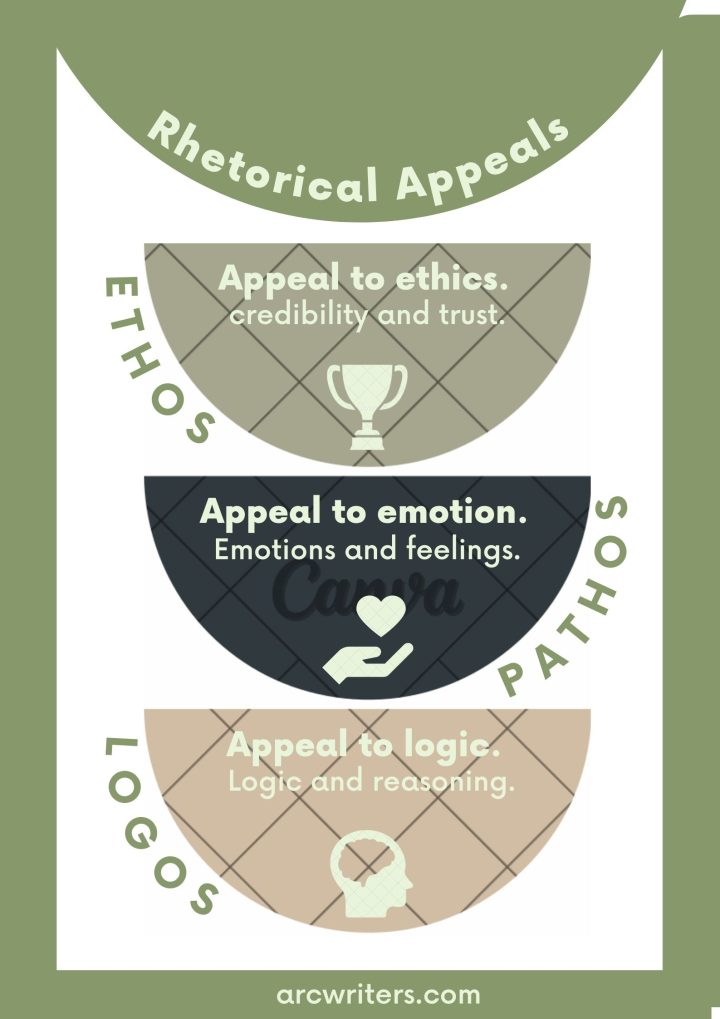
Literary criticism
Rhetorical devices such as ethos, pathos, and logos are instrumental in persuasive writing. Ethos establishes the credibility of the critic, enhancing the reader’s trust in the presented analysis. Pathos appeals to the reader’s emotions, evoking empathy or sympathy towards the subject matter. Logos employs logical reasoning and evidence to support arguments, reinforcing the validity of the critique. By strategically incorporating these persuasive elements, literary critics can effectively sway readers’ opinions and garner support for their interpretations.
Vivid Imagery and Descriptive Language:
Descriptive language and vivid imagery serve to enrich the critical essay, immersing the reader in the world of the literary work under scrutiny. Metaphors, similes, and analogies create vivid comparisons, elucidating complex concepts and enhancing reader comprehension. Through detailed descriptions and sensory imagery, critics can evoke powerful visualizations, fostering a deeper connection between the reader and the text. By appealing to the reader’s imagination, rhetorical devices transform abstract ideas into tangible experiences, making the critique more engaging and memorable.
Rhythm and Syntax:
The rhythm and syntax of prose significantly impact the flow and coherence of a critical essay. Parallelism, repetition, and rhetorical questions infuse the writing with rhythm, creating a captivating cadence that holds the reader’s attention. Varied sentence structures and syntactical devices add complexity and nuance to the critique, reflecting the multifaceted nature of literary analysis. By manipulating language rhythmically and syntactically, critics can emphasize key points, build suspense, or evoke a particular mood, thereby enhancing the overall impact of their argument.
Satire:
Satire employs humor and exaggeration to critique societal norms or conventions, provoking reflection and discourse. By employing irony and satire, literary critics can inject levity and perspective into their analysis, fostering a more dynamic and thought-provoking discourse.
Symbolism and Allegory:
Symbolism and allegory enrich the interpretation of literary texts by imbuing them with deeper layers of meaning and significance. Through symbols, motifs, and allegorical references, critics can unveil hidden themes, subtexts, and cultural contexts embedded within the narrative. Symbolism transcends literal interpretation, inviting readers to explore the symbolic resonance of characters, objects, and events. Allegory, meanwhile, employs extended metaphorical narratives to convey moral, philosophical, or political messages, inviting readers to engage with the text on multiple levels of interpretation. By deciphering the symbolic language of the text, critics can unveil its underlying complexities and provoke insightful discussions about its deeper significance.
Conclusion:
In the field of literary criticism, rhetorical devices serve as indispensable tools for conveying complex ideas, stimulating thought, and engaging readers. Whether through the vivid imagery of metaphor, the subtle irony of irony, or the rhythmic coherence of parallelism, critics can enhance the impact of their analyses and interpretations, elevating the discourse surrounding literary works. By mastering the artful deployment of rhetorical devices, critics can transcend mere analysis and criticism, transforming their essays into compelling works of art that resonate with readers on a profound level. As we continue to explore the intersection of rhetoric and criticism, let us embrace the transformative power of language to illuminate the beauty and complexity of literature.
