
Abstract
The discussion section of a peer-reviewed paper serves as the heart of the research, where the significance, implications, limitations, and future directions of the study are explored. Crafting a strong discussion section is essential for effectively communicating the findings and contributing to the scientific discourse. This article delves into the key elements and strategies for constructing a robust discussion section in a peer-reviewed paper.
Introduction
The discussion section of a peer-reviewed paper is where the researcher engages in critical analysis, interpretation, and synthesis of the results obtained. It is not merely a summary of findings but an opportunity to contextualize the research within the broader scientific landscape, evaluate its significance, and offer insights for future research directions. Crafting a strong discussion section requires careful consideration of several key elements to ensure clarity, coherence, and credibility.
Understanding the Purpose of the Discussion Section
Discussion Section
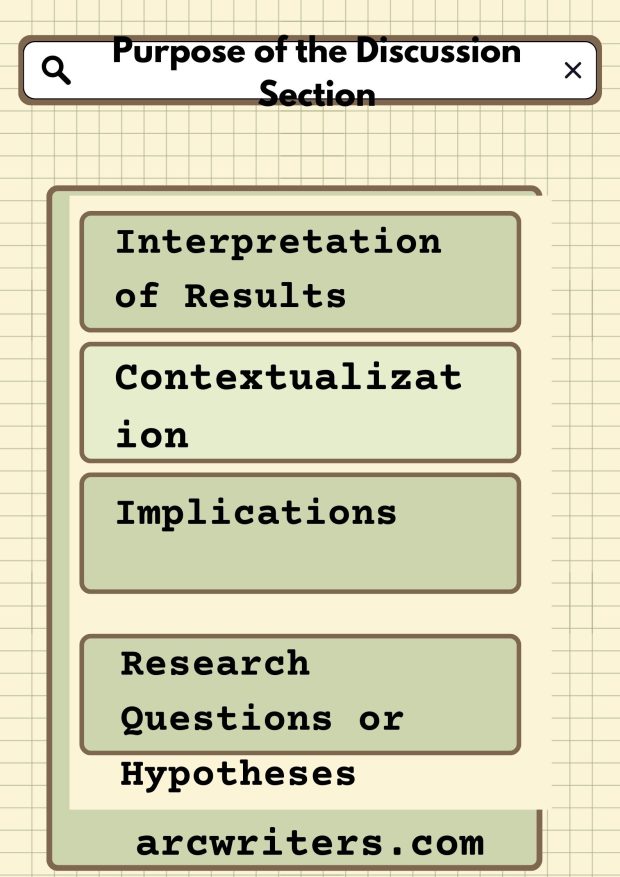
The discussion section of a peer-reviewed paper serves multiple crucial purposes, each of which contributes to the overall effectiveness and impact of the research. Understanding these purposes is essential for researchers to craft a strong and insightful discussion section. Here are the key purposes:
-
Interpretation of Results:
- One primary purpose of the discussion section is to interpret the results obtained from the research study. This involves explaining the significance of the findings, identifying patterns or trends, and discussing their implications in the context of the research question or hypothesis.
- Researchers should avoid simply restating the results but instead delve deeper into what they mean and why they matter. Interpretation requires critical thinking and analytical skills to draw meaningful conclusions from the data.
-
Contextualization:
- Another important purpose of the discussion section is to contextualize the findings within the broader scope of existing literature. This involves comparing and contrasting the results with previous studies, theories, or models relevant to the research topic.
- By placing the findings in context, researchers demonstrate how their work builds upon existing knowledge, fills gaps in the literature, or challenges established theories. This contextualization is crucial for understanding the novelty and significance of the research.
-
Implications:
- The discussion section should also discuss the implications of the findings, both theoretical and practical. This involves considering the broader implications of the research for the field of study, as well as its potential applications in real-world settings.
- Researchers should reflect on how their findings contribute to advancing knowledge, solving practical problems, or informing policy and practice. Articulating these implications helps justify the importance of the research and its relevance to various stakeholders.
-
Addressing Research Questions or Hypotheses:
- Throughout the discussion section, researchers should revisit the research questions or hypotheses formulated at the outset of the study. They should evaluate how well the findings address these questions and whether they support or refute the initial hypotheses.
- Discussing the alignment between the research questions and the obtained results provides clarity on the study’s objectives and helps readers understand the significance of the findings in addressing these objectives.
Key Elements of a Strong Discussion Section:
-
Interpretation of Results:
- Begin by summarizing the key findings of the study concisely.
- Provide a detailed interpretation of the results, explaining their significance in relation to the research question or hypothesis.
- Discuss any unexpected findings and propose plausible explanations or hypotheses.
- Use visual aids such as tables, graphs, or figures to enhance the presentation of results and interpretations.
-
Comparison with Previous Studies:
- Compare and contrast the current findings with those of previous studies in the field.
- Highlight similarities, differences, or contradictions between the findings, and discuss possible reasons for these discrepancies.
- Emphasize how the current study contributes to advancing or challenging existing knowledge and theories.
-
Implications and Applications:
- Discuss the broader implications of the findings for theory, practice, policy, or society.
- Explore how the results address gaps in knowledge or provide new insights into the research area.
- Consider the practical applications or potential impact of the findings on relevant stakeholders or communities.
-
Limitations and Alternative Explanations:
- Acknowledge and critically evaluate any limitations or constraints of the study, such as sample size, methodology, or measurement tools.
- Discuss potential sources of bias or confounding variables that may have influenced the results.
- Offer suggestions for future research to address these limitations and strengthen the validity of the findings.
-
Conclusion and Synthesis:
- Summarize the main points discussed in the discussion section, emphasizing the key insights and contributions of the study.
- Reinforce the significance of the findings and their relevance to the broader scientific community.
- Provide a clear conclusion that ties back to the research question or objectives and highlights the study’s overall impact.
Strategies for Crafting a Strong Discussion Section:
-
Structure and Organization:
- Develop a clear and logical structure for the discussion section, with subsections devoted to each key element.
- Use headings and subheadings to guide the reader through the discussion and facilitate navigation.
- Ensure smooth transitions between paragraphs and subsections to maintain coherence and flow.
-
Clarity and Precision:
- Use clear and precise language to convey your arguments and interpretations effectively.
- Define any technical terms or concepts to ensure understanding by readers from diverse backgrounds.
- Avoid ambiguity or vagueness in your statements and provide concrete examples or evidence to support your claims.
-
Critical Thinking and Analysis:
- Engage in critical analysis and synthesis of the findings, considering alternative explanations and interpretations.
- Demonstrate a nuanced understanding of the research topic and its complexities, acknowledging areas of uncertainty or ambiguity.
- Foster a spirit of intellectual curiosity and openness to new ideas, even if they challenge your own assumptions or conclusions.
-
Objectivity and Balance:
- Maintain objectivity and balance in your discussion, avoiding bias or undue speculation.
- Acknowledge the limitations of the study and any potential weaknesses in the research design or methodology.
- Present alternative viewpoints or interpretations with fairness and respect, even if they diverge from your own perspective.
-
Engagement with the Literature:
- Demonstrate a thorough understanding of the relevant literature in the field, citing seminal studies and recent publications to support your arguments.
- Engage critically with existing theories, models, or frameworks, evaluating their applicability to the current study.
- Identify areas of consensus and controversy in the literature and position your findings within this scholarly discourse.
Conclusion
Crafting a strong discussion section is essential for presenting the significance, implications, and limitations of your research in a peer-reviewed paper. By following the key elements and strategies outlined in this article, researchers can effectively communicate their findings, contribute to the advancement of knowledge in their field, and inspire future research directions. A well-crafted discussion section not only enhances the credibility of the study but also enriches the scientific discourse and fosters intellectual dialogue within the research community.
