
Introduction
Midwifery, often considered one of the oldest professions in the world, plays a crucial role in maternal and newborn health. From antiquity to modern times, midwives have been entrusted with guiding women through the journey of pregnancy, childbirth, and the postpartum period. However, the roles and responsibilities of midwifery extend far beyond simply delivering babies. In this comprehensive exploration, we will delve into the multifaceted nature of midwife, examining its historical roots, contemporary practices, ethical considerations, and future challenges.

Historical Context of Midwifery
The history of midwifery is deeply intertwined with the evolution of human civilization. In ancient cultures, midwives were revered figures, possessing knowledge passed down through generations. From the Egyptian “mesenkhetsu” to the Greek “maia,” midwives played pivotal roles in childbirth, often regarded as guardians of life and wisdom. Throughout the medieval period and into the Renaissance, midwifery remained predominantly a female-centric practice, grounded in traditional wisdom and practical experience.
The advent of modern medicine brought significant changes to the field of midwifery. With the rise of obstetrics in the 19th century, childbirth increasingly shifted from the home to the hospital. This transition led to the professionalization of midwifery, as practitioners sought to formalize their training and establish standards of practice. Despite these advancements, midwiferies faced challenges from the medical establishment, with some viewing midwives as inferior to physicians.
Contemporary Practices and Responsibilities
Today, midwives encompasses a diverse range of practices, from home births attended by independent midwives to hospital deliveries in collaboration with obstetricians. Midwives provide comprehensive care to women throughout the reproductive lifecycle, including prenatal care, childbirth support, and postpartum care. Their roles and responsibilities often extend beyond clinical duties to encompass education, advocacy, and support for women and their families.
In many countries, midwifery is a regulated profession governed by strict standards of practice and ethics. Midwives undergo rigorous training, which may include academic study, clinical experience, and certification exams. This education equips midwives with the knowledge and skills necessary to provide safe and effective care to women and newborns.
One of the core principle roles of midwifery is the promotion of physiological birth. Midwives emphasize the body’s natural ability to give birth and strive to minimize unnecessary interventions. They prioritize holistic care, taking into account the physical, emotional, and social aspects of childbirth. This approach fosters a sense of empowerment and autonomy for women, enabling them to make informed decisions about their birthing experiences.
Roles of Midwives
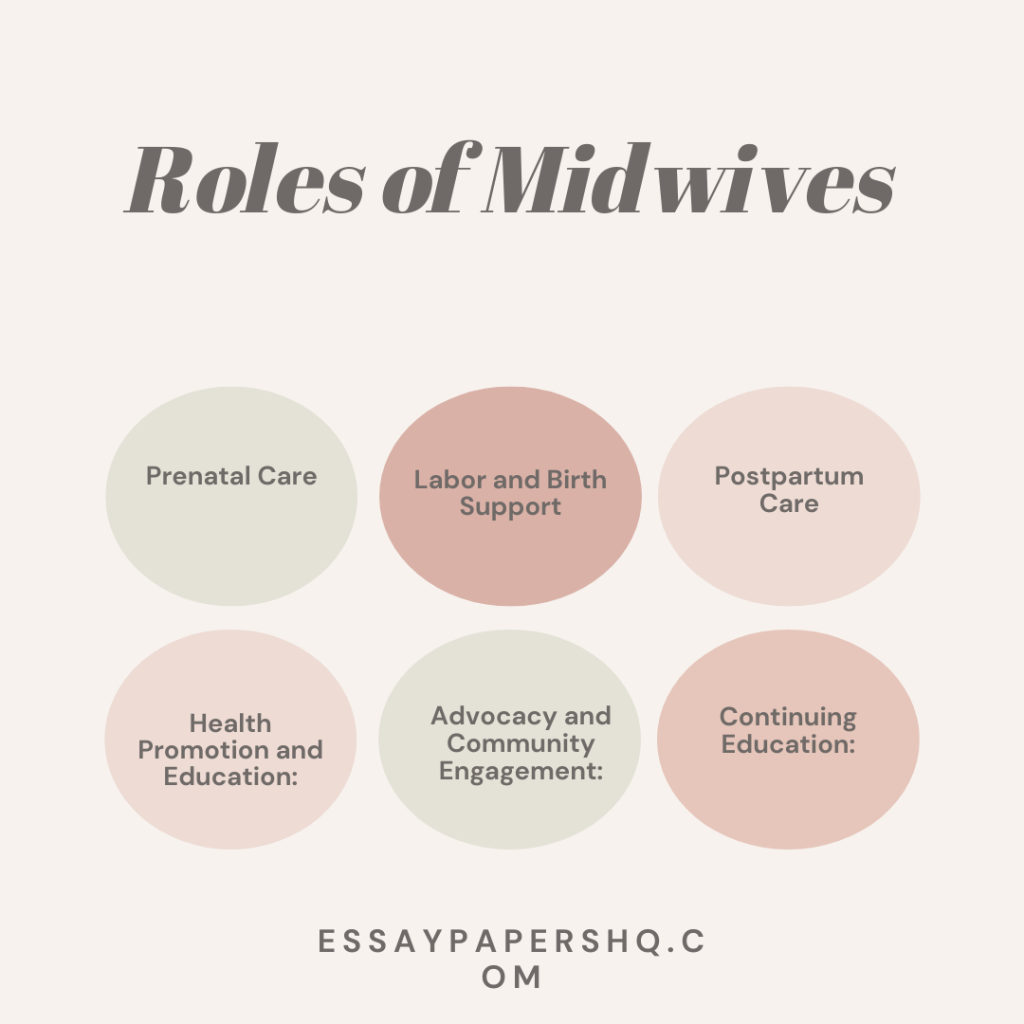
- Prenatal Care:
- One of the primary roles of midwives is to provide comprehensive prenatal care to expectant mothers. This includes conducting routine check-ups, monitoring the health of the mother and fetus, and offering guidance on nutrition and lifestyle choices.
- Midwives collaborate with other healthcare professionals, such as obstetricians and nurses, to ensure that pregnant women receive appropriate medical interventions when necessary.
- Labor and Birth Support:
- Midwives play a central roles during labor and childbirth, providing emotional support, comfort measures, and medical assistance as needed.
- They advocate for the rights of women to make informed decisions about their birth experiences, empowering them to participate actively in the birthing process.
- Postpartum Care:
- Following childbirth, midwives continue to provide care to both mother and baby during the postpartum period. This includes monitoring recovery, assisting with breastfeeding, and addressing any concerns or complications that may arise.
- Midwives offer guidance on newborn care and parenting, promoting bonding and nurturing relationships within the family.
- Health Promotion and Education:
- In addition to clinical care, midwives are educators and advocates for maternal and infant health. They provide information on contraception, family planning, and healthy lifestyle choices to women and their families.
- Midwives may also conduct childbirth education classes and workshops to prepare expectant parents for the birthing process and parenthood.
- Advocacy and Community Engagement:
- Midwives play a crucial roles in advocating for policies and practices that promote the rights and well-being of women and newborns. This includes advocating for access to quality maternal healthcare services, especially in underserved communities.
- They engage with community organizations and stakeholders to raise awareness about maternal and infant health issues and address disparities in healthcare access and outcomes.
Responsibilities of Midwives:
- Clinical Practice:
- Midwives are responsible for providing evidence-based, culturally sensitive care to women and newborns, adhering to professional standards and guidelines.
- They collaborate with interdisciplinary healthcare teams to ensure continuity of care and optimal outcomes for their clients.
- Documentation and Record-Keeping:
- Midwives maintain accurate and detailed records of their interactions with clients, including prenatal assessments, labor progress, and postpartum follow-up.
- Proper documentation is essential for continuity of care, communication with other healthcare providers, and legal purposes.
- Continuing Education:
- Midwives are lifelong learners, committed to staying abreast of advancements in maternal and infant healthcare.
- They participate in continuing education programs, attend conferences, and engage in peer-reviewed literature to enhance their knowledge and skills.
- Professional Ethics:
- Midwives adhere to ethical principles and standards of practice, including respect for autonomy, beneficence, and non-maleficence.
- They maintain confidentiality, respect cultural diversity, and advocate for social justice and human rights in their practice.
Challenges and Opportunities in Midwifery:
- Healthcare System Integration:
- Despite the growing recognition of the value of midwifery care, challenges remain in integrating midwifery services into mainstream healthcare systems.
- Efforts to promote interdisciplinary collaboration and establish collaborative practice models can enhance the role of midwives within healthcare teams.
- Addressing Health Disparities:
- Midwives play a crucial roles in addressing disparities in maternal and infant health outcomes, particularly among marginalized and underserved populations.
- By focusing on culturally competent care, community engagement, and advocacy for health equity, midwives can contribute to reducing disparities and improving health outcomes for all women and newborns.
- Professional Regulation and Licensing:
- Regulation and licensing requirements for midwives vary across different jurisdictions, which can create challenges in ensuring standardized education and practice.
- Establishing clear guidelines for education, certification, and licensure can enhance the credibility and accountability of midwifery as a profession.
Ethical Considerations in Midwifery Practice
Ethical dilemmas are inherent in the practice of midwifery, as midwives navigate complex situations involving maternal and fetal health, informed consent, and cultural diversity. One such dilemma is the balance between autonomy and beneficence. While midwives respect women’s right to make choices about their care, they also have a duty to safeguard the health and well-being of both mother and baby.
In cases where medical intervention is necessary, midwives must carefully weigh the risks and benefits, ensuring that interventions are justified and respectful of women’s preferences. Additionally, midwives must navigate cultural differences and disparities in access to care, striving to provide culturally competent and equitable services to all women, regardless of background or socioeconomic status.
Another ethical consideration in midwifery practice is the issue of informed consent. Midwives must ensure that women have a clear understanding of their options and the potential risks and benefits associated with each choice. This requires effective communication and shared decision-making between midwives and their clients, fostering trust and collaboration throughout the childbirth process.
Challenges and Future Directions
Despite its long history and enduring importance, midwifery faces numerous challenges in the modern healthcare landscape. One such challenge is the integration of midwifery into mainstream healthcare systems. In many countries, midwifery is still seen as a niche profession rather than an essential component of maternal healthcare. This lack of recognition can hinder midwives’ ability to practice to the full extent of their training and expertise.
Another challenge is the shortage of midwives in many parts of the world, particularly in rural and underserved areas. This shortage is exacerbated by factors such as limited educational opportunities, low salaries, and inadequate resources for midwifery practice. Addressing these workforce issues is essential for improving access to maternal and newborn care and reducing maternal and infant mortality rates globally.
Looking ahead, the future of midwifery lies in collaboration, innovation, and advocacy. By working collaboratively with other healthcare professionals, policymakers, and community stakeholders, midwives can advocate for policies and practices that prioritize maternal and newborn health. Embracing innovation in technology and evidence-based practices can also enhance the quality and efficiency of midwifery care, ensuring that women receive the best possible care during pregnancy, childbirth, and beyond.