
Introduction:
Plot development is a crucial aspect of crafting compelling narrative essays. Just like in fiction writing, narrative essays require a well-structured plot to engage readers and convey the author’s message effectively. Whether recounting personal experiences or exploring fictional scenarios, mastering plot development is essential for creating narratives that resonate with audiences. In this exploration, we’ll delve into the intricacies of plot development in narrative essays, examining key elements, techniques, and strategies to captivate readers and convey meaningful stories.
Understanding Narrative Essays:
Before looking into plot development, it’s vital to grasp the essence of narrative essays. Unlike other forms of academic writing, narrative essays are characterized by their storytelling nature. They allow authors to share personal experiences, insights, and perspectives in a creative and engaging manner. Through vivid descriptions, emotional resonance, and a coherent story line, narrative essays aim to evoke empathy, provoke thought, or entertain readers.
Key Elements of Plot Development:
Plot development in narrative essays revolves around several key elements, each contributing to the overall structure and impact of the story:
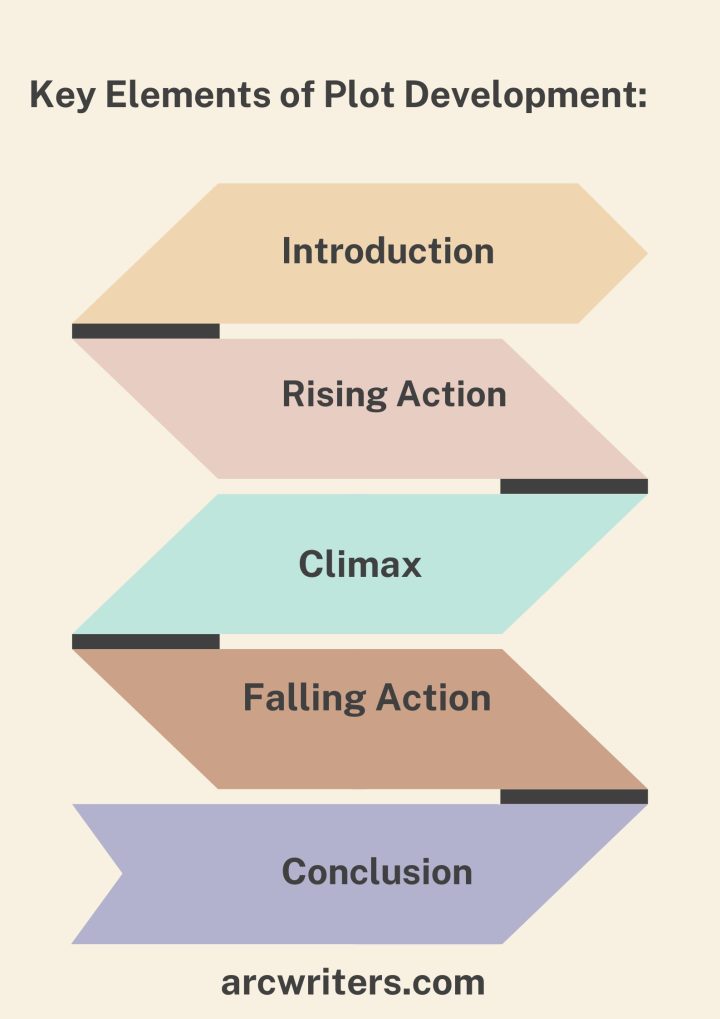
Key Elements of Plot Development
- Introduction: The introduction sets the stage for the narrative, introducing the main characters, setting, and the central conflict or theme. It should hook the reader’s attention and provide a glimpse of what’s to come.
- Rising Action: This phase of the plot involves the development of the central conflict or problem faced by the protagonist. Tension builds as obstacles arise, and the protagonist confronts challenges or dilemmas.
- Climax: The climax is the turning point of the narrative, where the tension reaches its peak, and the protagonist faces a critical decision or revelation. It’s the most intense moment of the story, often determining its outcome.
- Falling Action: Following the climax, the falling action sees the resolution of the central conflict. Loose ends are tied up, and the narrative moves towards its conclusion.
- Conclusion: The conclusion brings closure to the story, reflecting on the protagonist’s journey and the lessons learned. It leaves a lasting impression on the reader, reinforcing the narrative’s message or significance.
Techniques for Effective Plot Development:
Crafting a compelling plot in a narrative essay requires employing various techniques to engage readers and maintain their interest throughout the story:
- Character Development: Characters play a central role in driving the plot forward and engaging the reader emotionally. Develop well-rounded characters with distinct personalities, motivations, and flaws to make them relatable and memorable.
- Descriptive Language: Vivid descriptions of settings, emotions, and sensory details enhance the reader’s immersion in the narrative. Use descriptive language to paint a vivid picture of scenes and evoke emotional responses.
- Dialogue: Dialogue adds depth and authenticity to characters, allowing them to express thoughts, emotions, and conflicts directly. Use dialogue to reveal character dynamics, advance the plot, and create tension.
- Pacing: Effective pacing is crucial for maintaining momentum and sustaining the reader’s interest. Balance slower-paced moments of reflection or introspection with scenes of action or conflict to keep the narrative engaging.
- Foreshadowing: Foreshadowing hints at future events or outcomes, building anticipation and suspense. Incorporate subtle clues or hints throughout the narrative to foreshadow key plot developments and enhance dramatic tension.
Strategies for Narrative Essay Writing:
In addition to techniques for plot development, several strategies can help authors craft compelling narrative essays:
- Choose a Compelling Topic: Select a topic that is meaningful, personal, or relevant to the intended audience. Whether recounting a personal experience or exploring a broader theme, choose a subject that resonates emotionally and intellectually.
- Establish a Clear Purpose: Clarify the purpose or message of the narrative essay early on, guiding the plot development towards a coherent and impactful conclusion. Whether seeking to inspire, inform, or entertain, ensure that the narrative serves its intended purpose effectively.
- Show, Don’t Tell: Rather than simply stating events or emotions, show them through vivid descriptions, actions, and dialogue. Engage the reader’s senses and imagination, allowing them to experience the narrative firsthand.
- Revise and Edit: Writing a compelling narrative essay often requires multiple drafts and revisions. Take the time to review and refine the plot, characters, and language, ensuring clarity, coherence, and impact.
- Seek Feedback: Share your narrative essay with trusted peers, mentors, or writing groups to gather feedback and perspectives. Consider their insights and suggestions for improving the plot development and overall effectiveness of the narrative.
Conclusion:
Mastering plot development in narrative essays is essential for creating compelling stories that resonate with readers. By understanding the key elements, techniques, and strategies discussed, authors can craft narratives that captivate audiences, convey meaningful messages, and leave a lasting impression. Whether recounting personal experiences, exploring fictional scenarios, or delving into broader themes, effective plot development enhances the impact and relevance of narrative essays, fostering connection, empathy, and understanding. Through careful planning, creative execution, and thoughtful revision, authors can harness the power of plot development to craft narratives that inspire, entertain, and provoke thought.
