
Introduction:
Adult nursing involves the provision of holistic care to individuals aged 18 years and older, encompassing various health needs and conditions. In today’s dynamic healthcare landscape, evidence-based practice (EBP) has emerged as a cornerstone in delivering high-quality care. This essay explores the significance of evidence-based best practices in adult nursing, highlighting their impact on patient outcomes and the nursing profession.
Understanding Evidence-Based Practice in Nursing
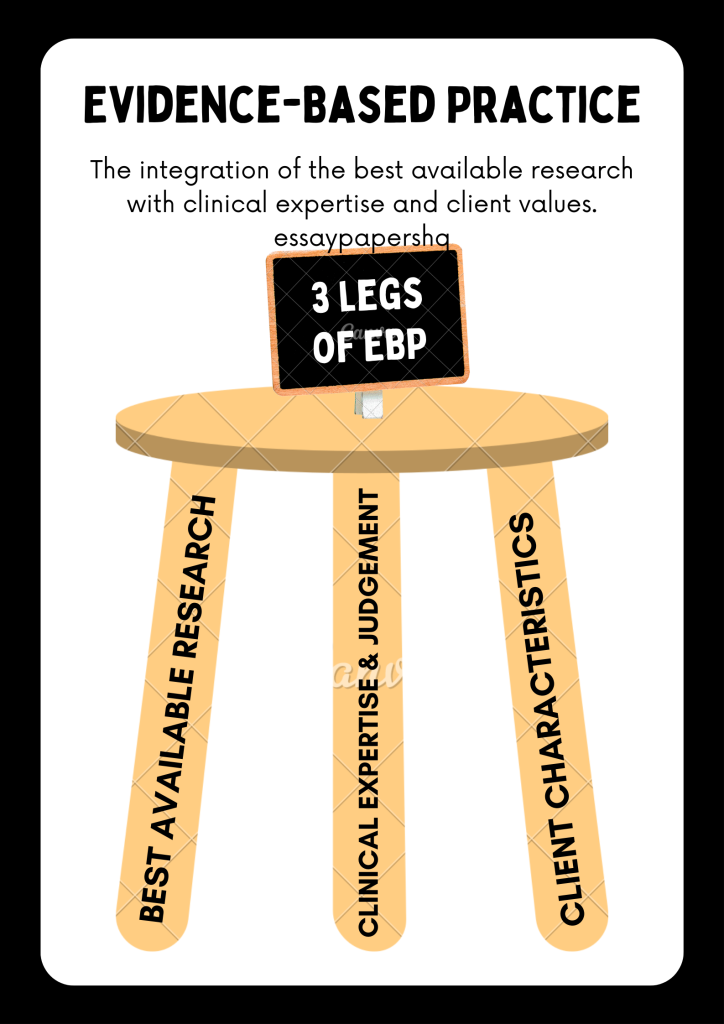
Evidence-based practices in nursing involves the conscientious integration of three key components: clinical expertise, the best available evidence from systematic research, and patient preferences and values. Nurses play a pivotal role in synthesizing these components to deliver individualized care that optimizes patient outcomes.
- Clinical Expertise: Clinical expertise encompasses the knowledge, skills, and experience acquired through nursing education and practice. It empowers nurses to critically assess patient needs, make informed clinical judgments, and implement appropriate interventions. Nurses continually refine their clinical expertise through ongoing education, training, and professional development activities.
- Best Available Evidence: The foundation of evidence-based practice lies in utilizing the best available evidence derived from rigorous research methodologies. This evidence includes findings from randomized controlled trials (RCTs), systematic reviews, meta-analyses, and clinical practice guidelines. Nurses must critically appraise the quality and relevance of research evidence to inform their clinical decision-making processes effectively.
- Patient Preferences and Values: Recognizing the unique preferences, values, and cultural backgrounds of each patient is fundamental to delivering patient-centered care. Nurses engage in open communication and shared decision-making with patients to understand their treatment goals, preferences, and concerns. Incorporating patient perspectives into care planning enhances treatment adherence and promotes positive health outcomes.
Importance of Evidence-Based Practices in Adult Nursing:
Enhancing Patient Safety
Enhancing patient safety stands as a paramount priority within the realm of adult nursing, underscored by the crucial importance of evidence-based practices. In the dynamic landscape of healthcare, where patient outcomes hinge on multifaceted interventions and care delivery, evidence-based practices serve as the cornerstone for ensuring optimal standards of care. By anchoring clinical decision-making in robust evidence derived from rigorous research and empirical data, nurses can adeptly navigate the complexities of patient care, mitigating risks and minimizing errors.
From medication administration to infection control protocols, evidence-based practices furnish nurses with a comprehensive toolkit that amalgamates scientific evidence, clinical expertise, and patient preferences. This synergy fosters a culture of continuous improvement and innovation, wherein nursing interventions are continually refined and optimized to align with the latest advancements in healthcare science. Consequently, the integration of evidence-based practices not only fortifies patient safety but also augments the overall quality of care delivery, affirming its indispensable role in the fabric of adult nursing practice.
Improving Clinical Outcomes
Improving clinical outcomes stands as a pivotal objective within adult nursing, with evidence-based practices serving as a linchpin in achieving this goal. In the pursuit of optimal patient care, nurses rely on evidence-based guidelines, protocols, and interventions that are grounded in rigorous research and proven effectiveness. By adhering to evidence-based practices, nurses can enhance the quality and efficacy of clinical interventions, leading to improved patient outcomes across various healthcare settings. Whether managing chronic conditions, administering treatments, or implementing preventive measures, evidence-based practices equip nurses with the knowledge and tools necessary to deliver high-quality, evidence-driven care. This not only fosters positive health outcomes but also minimizes the incidence of adverse events, complications, and hospital readmissions.
Moreover, evidence-based practices facilitate the identification of best practices and promote a culture of continuous learning and improvement within the nursing profession. Thus, the integration of evidence-based practices stands as a cornerstone of adult nursing, ensuring that patient care is guided by the latest scientific evidence and clinical expertise, ultimately leading to enhanced clinical outcomes and improved patient well-being.
Facilitating Informed Decision-Making
Facilitating informed decision-making is a critical aspect of adult nursing, underscored by the importance of evidence-based practices. Nurses serve as advocates for their patients, guiding them through complex healthcare decisions by providing evidence-based information and recommendations. By integrating evidence-based practices into their clinical judgment, nurses ensure that patients and their families are equipped with accurate, up-to-date information regarding their health conditions, treatment options, and potential outcomes. This enables patients to actively participate in their care, make informed decisions aligned with their values and preferences, and ultimately achieve better health outcomes.
Evidence-based practices empower nurses to sift through vast amounts of research and clinical data, distilling key findings into actionable insights that guide patient care pathways. Moreover, by engaging in shared decision-making processes with patients, nurses foster trust, collaboration, and mutual respect, thereby promoting patient-centered care delivery. In essence, the incorporation of evidence-based practices in adult nursing facilitates informed decision-making, enhances patient autonomy, and cultivates therapeutic partnerships that optimize health outcomes and promote overall well-being.
Promoting Professional Development
Promoting professional development stands as a fundamental pillar within adult nursing, with evidence-based practices playing a pivotal role in nurturing a culture of continuous learning and growth. As the healthcare landscape evolves and new research emerges, nurses must remain abreast of the latest evidence-based guidelines, protocols, and interventions to deliver optimal patient care. By engaging with evidence-based practices, nurses enhance their clinical expertise, refine their critical thinking skills, and expand their knowledge base, ultimately advancing their professional competence.
Furthermore, evidence-based practices stimulate curiosity and inquiry among nurses, encouraging them to question existing practices, explore innovative solutions, and contribute to the generation of new knowledge through research and scholarly inquiry. Through ongoing professional development fueled by evidence-based practices, nurses are better equipped to address the complexities of modern healthcare delivery, adapt to emerging challenges, and uphold the highest standards of care excellence. Thus, the integration of evidence-based practices not only fosters the professional growth and development of nurses but also strengthens the overall quality of care delivery, positioning them as proactive agents of change within the healthcare system.
Evidence-Based Best Practices in Adult Nursing:
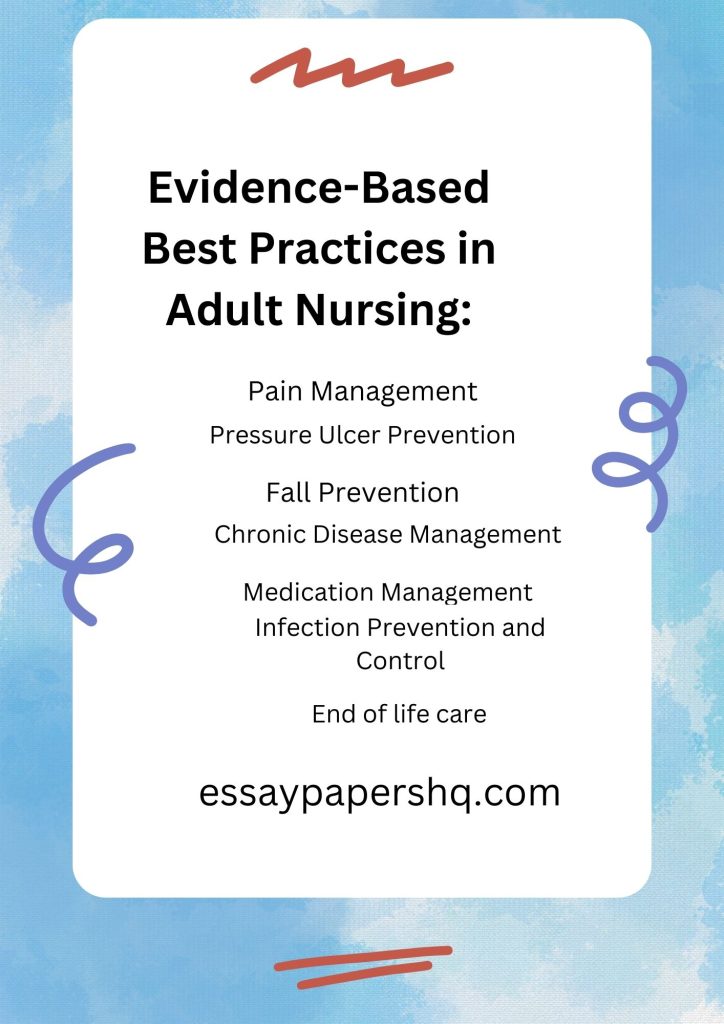
Pain Management
Pain management in adult nursing is a critical aspect of holistic patient care, where evidence-based best practices play a central role in ensuring optimal outcomes. By adhering to evidence-based guidelines and protocols, nurses can effectively assess, intervene, and monitor pain levels in their patients, tailoring interventions to individual needs and preferences. Utilizing evidence-based pharmacological and non-pharmacological approaches, nurses can alleviate pain while minimizing the risk of adverse effects and opioid-related complications.
Moreover, evidence-based practices empower nurses to engage in comprehensive pain assessments, utilizing validated tools and techniques to accurately gauge pain intensity and its impact on patients’ quality of life. By integrating evidence-based pain management strategies into their practice, nurses not only enhance patient comfort and satisfaction but also contribute to improved clinical outcomes, shorter hospital stays, and reduced healthcare costs. In essence, evidence-based pain management in adult nursing represents a cornerstone of compassionate and effective care delivery, reflecting the commitment of nurses to alleviate suffering and promote the well-being of their patients.
Pressure Ulcer Prevention
Pressure ulcer prevention represents a cornerstone of evidence-based best practices in adult nursing, emphasizing proactive measures to mitigate the risk of tissue damage and promote optimal patient outcomes. Grounded in robust research and clinical evidence, nurses employ a multifaceted approach to pressure ulcer prevention, encompassing comprehensive assessments, individualized care plans, and targeted interventions. Through regular skin assessments and risk assessments using validated tools, nurses can identify at-risk patients and implement evidence-based strategies to reduce pressure, friction, and shear forces on vulnerable areas.
These strategies may include repositioning schedules, specialized support surfaces, meticulous skin care regimens, and patient education on the importance of mobility and nutrition. By adhering to evidence-based best practices in pressure ulcer prevention, nurses not only enhance patient comfort and dignity but also contribute to improved wound healing outcomes, reduced healthcare costs, and enhanced overall quality of care delivery. Thus, pressure ulcer prevention exemplifies the commitment of nurses to deliver safe, effective, and evidence-based care that prioritizes the well-being of their patients.
Fall Prevention
Fall prevention stands as a paramount priority in adult nursing, epitomizing the integration of evidence-based best practices to safeguard patient safety and well-being. Nurses employ a multifaceted approach grounded in robust research and clinical evidence to assess fall risk, implement tailored interventions, and mitigate environmental hazards. Through comprehensive fall risk assessments using evidence-based tools, nurses identify intrinsic and extrinsic factors that predispose patients to falls, such as mobility impairments, medication side effects, and environmental obstacles. Armed with this information, nurses develop individualized care plans that incorporate evidence-based strategies to minimize fall risk, including strength and balance exercises, assistive devices, regular toileting schedules, and environmental modifications.
Moreover, nurses engage in ongoing patient education and interdisciplinary collaboration to reinforce fall prevention measures and promote a culture of safety throughout the healthcare setting. By adhering to evidence-based best practices in fall prevention, nurses not only prevent falls and mitigate associated injuries but also enhance patient confidence, autonomy, and quality of life, underscoring their commitment to delivering safe, effective, and patient-centered care.
Medication Management
Medication management represents a cornerstone of evidence-based best practices in adult nursing, aiming to ensure the safe and effective administration of medications while minimizing adverse events and promoting optimal patient outcomes. Grounded in robust research and clinical evidence, nurses meticulously assess patients’ medication profiles, allergies, and individual responses to treatment to develop personalized medication regimens. Utilizing evidence-based guidelines and protocols, nurses employ a systematic approach to medication administration, encompassing accurate medication reconciliation, thorough patient education, and vigilant monitoring for therapeutic efficacy and potential adverse effects.
Furthermore, nurses collaborate with healthcare teams to promote interdisciplinary communication and coordinate care transitions, facilitating continuity of medication management across healthcare settings. By adhering to evidence-based best practices in medication management, nurses not only enhance medication safety and adherence but also contribute to improved patient outcomes, reduced medication errors, and enhanced overall quality of care delivery, reflecting their commitment to excellence in nursing practice.
Chronic Disease Management
Chronic disease management stands as a cornerstone of evidence-based best practices in adult nursing, embodying a comprehensive and patient-centered approach to address the complex needs of individuals living with chronic conditions. Grounded in robust research and clinical evidence, nurses play a pivotal role in the ongoing assessment, education, and support of patients with chronic diseases, aiming to optimize their health outcomes and quality of life. Through evidence-based guidelines and protocols, nurses collaborate with patients to develop personalized care plans tailored to their unique needs, preferences, and goals. This may include medication management, lifestyle modifications, self-management strategies, and regular monitoring to prevent complications and promote disease control.
Furthermore, nurses leverage technology and telehealth solutions to enhance patient engagement, facilitate remote monitoring, and provide timely interventions. By adhering to evidence-based best practices in chronic disease management, nurses empower patients to take an active role in their care, fostering a sense of autonomy, empowerment, and self-efficacy. Moreover, nurses contribute to the prevention of disease progression, reduction of hospitalizations, and optimization of healthcare resources, underscoring their commitment to excellence in nursing practice and the promotion of holistic patient well-being.
Infection Prevention and Control
Infection prevention and control represent vital components of evidence-based best practices in adult nursing, embodying a comprehensive approach to safeguarding patient safety and minimizing the risk of healthcare-associated infections (HAIs). Nurses adhere to Evidence-based practices guidelines and protocols grounded in rigorous research and clinical evidence to mitigate the spread of infectious agents within healthcare settings. They employ a multifaceted strategy that includes hand hygiene, personal protective equipment (PPE) usage, environmental cleaning, and adherence to standard precautions.
Moreover, nurses play a pivotal role in surveillance activities, conducting regular assessments to identify potential outbreaks, monitor infection rates, and implement timely interventions. Through ongoing education and training, nurses ensure adherence to evidence-based practices among healthcare personnel and empower patients and families with the knowledge and skills necessary to prevent infections. By prioritizing infection prevention and control measures, nurses not only protect patients from harm but also contribute to the optimization of healthcare outcomes, reduction of healthcare costs, and promotion of a safe and conducive healthcare environment for all.
End of life care
End-of-life care represents a critical aspect of evidence-based best practices in adult nursing, emphasizing a compassionate and holistic approach to supporting individuals and their families during the terminal phase of illness. Grounded in robust research and clinical evidence, nurses play a pivotal role in facilitating open and honest communication, exploring patients’ values and preferences, and coordinating care that aligns with their goals and wishes. Evidence-based interventions focus on managing symptoms such as pain, dyspnea, and nausea through pharmacological and non-pharmacological means, ensuring optimal comfort and quality of life.
Furthermore, nurses provide emotional and spiritual support to patients and their families, addressing existential concerns and facilitating meaningful connections. By adhering to evidence-based best practices in end-of-life care, nurses not only honor patients’ autonomy and dignity but also foster a peaceful and dignified transition, promoting the well-being of patients and families during this vulnerable time.
Challenges and Barriers to Implementing Evidence-Based Best Practices:
- Limited Access to Research Evidence: Nurses may encounter challenges accessing and interpreting research evidence due to restricted institutional resources, lack of time, or insufficient skills in critically appraising research studies.
- Resistance to Change: Resistance to change from healthcare professionals, organizational culture, or entrenched practices can hinder the adoption of evidence-based best practices in adult nursing.
- Resource Constraints: Limited resources, including staffing shortages, budget constraints, and competing priorities, may impede the implementation of evidence-based interventions in clinical practice.
- Knowledge Translation Gaps: Discrepancies between research evidence and clinical practice guidelines, as well as delays in disseminating and implementing new evidence into practice, can create knowledge translation gaps in adult nursing.
People Also Read:
Navigating Ethical Dilemmas in Adult Nursing
evidence-based best practices in adult nursing
Crafting Adult Nursing Care Plans
Strategies to Promote Evidence-Based Practice in Adult Nursing:
Education and Training
An effective education and training strategy is essential to promote Evidence-based practices (EBP) in adult nursing, ensuring that nurses possess the knowledge, skills, and resources necessary to integrate the latest research findings into clinical decision-making. This strategy encompasses a multifaceted approach that begins with foundational education in Evidence-based practices principles during nursing school and continues through professional development opportunities throughout a nurse’s career. Key components of this strategy include workshops, seminars, online courses, and peer learning communities focused on critical appraisal of research literature, application of evidence-based guidelines, and implementation of best practices in clinical settings.
Furthermore, ongoing mentorship and support from EBP champions within healthcare organizations help nurses navigate barriers to EBP implementation and foster a culture of inquiry and innovation. By equipping nurses with the tools and competencies needed to embrace Evidence-based practices, this education and training strategy not only enhances the quality of patient care but also fosters a culture of continuous learning and improvement within the nursing profession.
Organizational Support
Organizational support plays a pivotal role in promoting evidence-based practice (EBP) in adult nursing, fostering an environment where nurses are empowered to integrate research findings into clinical decision-making and deliver high-quality, evidence-based care. This support entails establishing structures and processes that facilitate EBP implementation, including designated EBP committees, access to relevant literature and databases, and resources for staff education and training.
Moreover, organizational leaders play a crucial role in championing Evidence-based practices initiatives, advocating for the allocation of time and resources for Evidence-based practices activities, and creating a culture that values inquiry, innovation, and continuous improvement. By prioritizing EBP and providing the necessary support infrastructure, healthcare organizations not only enhance patient outcomes but also cultivate a workforce of engaged and empowered nurses who are committed to delivering evidence-based, patient-centered care.
Mentorship and Leadership
Mentorship and leadership are indispensable components in promoting evidence-based practice (EBP) within adult nursing, serving as catalysts for fostering a culture of inquiry, critical thinking, and continuous learning. Experienced nurse mentors play a pivotal role in guiding novice nurses through the complexities of EBP, offering support, expertise, and encouragement as they navigate the process of integrating research evidence into clinical practice.
Moreover, visionary nursing leaders inspire and empower their teams to embrace Evidence-based practices by providing guidance, resources, and opportunities for professional development. By cultivating a supportive environment where mentorship and leadership converge, nurses are equipped with the knowledge, skills, and confidence to critically appraise evidence, implement best practices, and drive meaningful change in healthcare delivery. Through mentorship and leadership initiatives that prioritize EBP, nursing professionals are empowered to elevate the standard of care, improve patient outcomes, and contribute to the advancement of the nursing profession as a whole.
Utilization of Technology
The utilization of technology represents a powerful tool in promoting evidence-based practices (EBP) within adult nursing, revolutionizing the way research evidence is accessed, disseminated, and applied in clinical settings. Electronic databases, such as PubMed and CINAHL, provide nurses with instant access to a vast array of scholarly literature, enabling them to stay current with the latest research findings and evidence-based guidelines. Moreover, electronic health records (EHRs) facilitate seamless integration of evidence-based protocols and decision support tools into clinical workflows, streamlining processes and enhancing adherence to best practices. Telehealth platforms offer opportunities for remote consultation and collaboration among healthcare professionals, promoting interdisciplinary communication and knowledge exchange.
Additionally, mobile applications and wearable devices empower patients to actively participate in their care, monitor health metrics, and adhere to treatment regimens, thereby facilitating evidence-based self-management strategies. By harnessing the power of technology, nurses can overcome barriers to Evidence-based practices implementation, enhance efficiency, and improve the quality of patient care, ultimately driving better health outcomes and advancing the practice of adult nursing in the digital age.
Patient Education Best Practices
Patient education is integral to promoting health promotion, disease prevention, and self-management skills among adult patients. Evidence-based patient education practices involve tailoring educational materials and interventions to the individual needs, preferences, and cultural backgrounds of patients while utilizing clear and accessible language.Interactive educational methods such as multimedia presentations, role-playing exercises, and hands-on demonstrations have been shown to be effective in enhancing patient engagement and knowledge retention. Moreover, incorporating motivational interviewing techniques allows nurses to explore patients’ beliefs, values, and motivations, facilitating the development of personalized care plans that align with patients’ goals and preferences.
Communication Best Practices

Effective communication is a cornerstone of nursing practice, facilitating collaboration among healthcare team members, promoting patient understanding and adherence to treatment plans, and ensuring the delivery of patient-centered care. Evidence-based communication strategies in adult nursing encompass a range of techniques aimed at fostering therapeutic relationships, enhancing information exchange, and addressing patient concerns.
One evidence-based communication practice is the use of teach-back techniques to assess patient comprehension and retention of health information. By asking patients to repeat back key concepts or instructions in their own words, nurses can identify areas of misunderstanding and clarify information as needed.
Frequently Asked Questions.
Discuss on Adult Health Education
Discuss on adult Health Monitoring