
Introduction
Addressing counterarguments in essays is an essential aspect of constructing persuasive and well-rounded arguments. Essays serve not only to present a viewpoint but also to engage in critical discourse by acknowledging and responding to opposing perspectives. This process not only strengthens the credibility of the author’s argument but also demonstrates intellectual rigor and fairness. In this comprehensive guide, we will explore the importance of addressing counterarguments in essays, effective strategies for identifying and responding to them, and examples of how to integrate counterarguments seamlessly into your writing.
The Importance of Addressing Counterarguments
Acknowledging it demonstrates intellectual honesty and fairness. It shows that the author has considered multiple perspectives before arriving at their conclusion, thereby enhancing their credibility.
Addressing them strengthens the author’s own argument by preemptively addressing potential objections and demonstrating a nuanced understanding of the topic.
Engaging with counterarguments fosters critical thinking skills by encouraging readers to consider alternative viewpoints and evaluate the strengths and weaknesses of different arguments.
Ignoring it can weaken the overall persuasiveness of an essay, leaving it vulnerable to criticism and undermining the author’s credibility.
Identifying Counterarguments:
Before addressing counterarguments, writers must first identify them within the discourse. It can manifest in various forms, including contrasting opinions, conflicting evidence, alternative interpretations, and logical fallacies. Thorough research and critical analysis are essential for recognizing potential counterarguments relevant to the topic at hand. Additionally, engaging with diverse sources and perspectives can help writers uncover nuances and complexities that may give rise to counterarguments.
Strategies for Identifying Counterarguments
Counterarguments
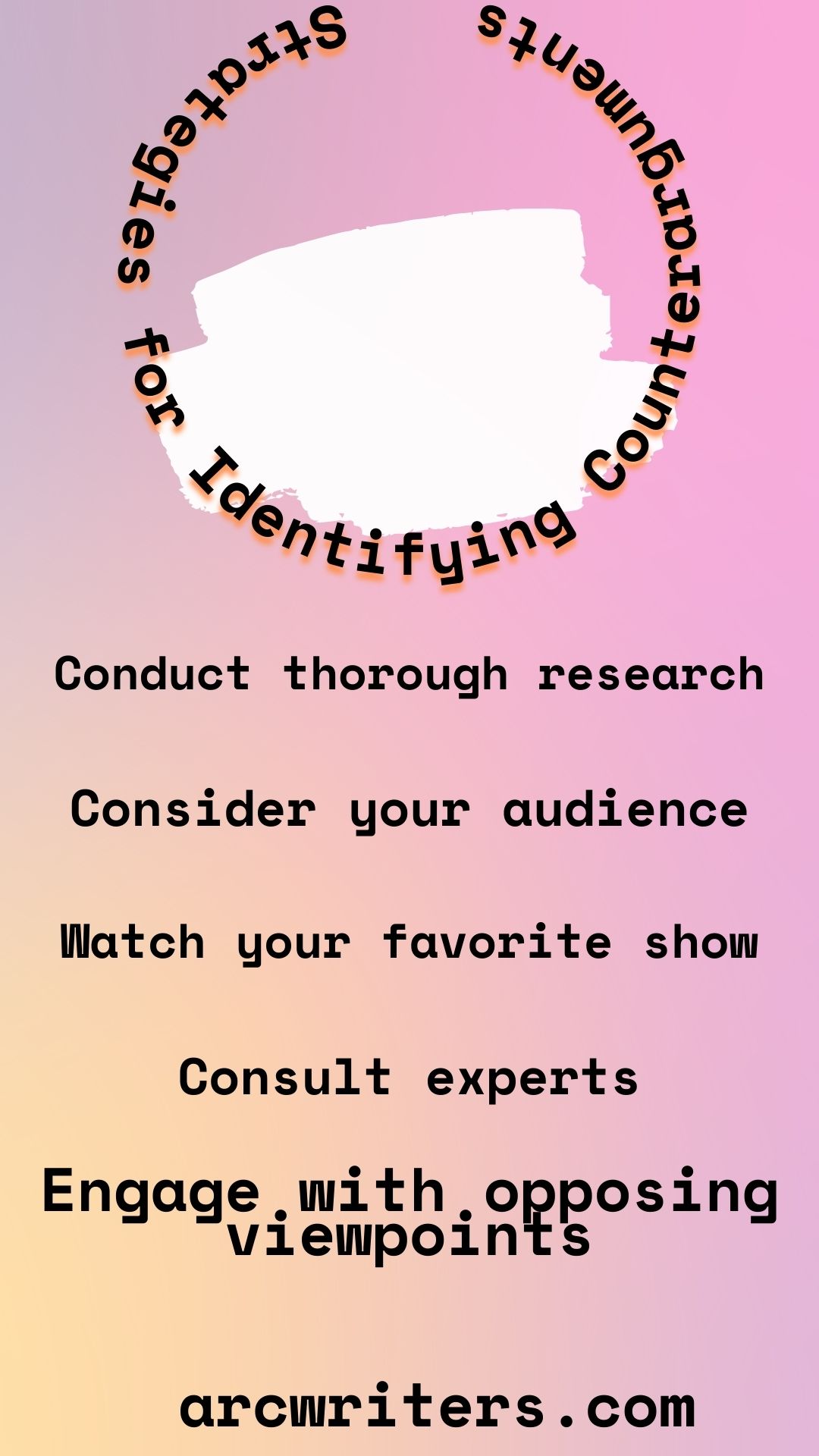
Conduct thorough research: Before writing your essay, explore a variety of sources to understand different perspectives on the topic. Look for evidence and arguments that contradict your own viewpoint.
Consider your audience: Anticipate the objections your audience might raise based on their beliefs, values, and background knowledge. Tailor your approach to address them effectively.
Engage with opposing viewpoints: Read essays, articles, and scholarly papers that present opposing arguments. Take note of the key points and evidence used to support these viewpoints.
Consult experts: Seek out experts in the field who hold differing opinions. Pay attention to their arguments and consider how they might challenge your own position.
Analyzing
Identify the main objections: Begin by clearly identifying the key counterarguments that challenge your thesis. Summarize these objections in your essay to ensure that you address them comprehensively.
Evaluate their strength: Assess the validity and credibility of each counterargument by examining the evidence, logic, and reasoning behind it. Determine whether the it poses a significant challenge to your own position.
Acknowledge valid points: If a counterargument contains valid points or evidence that support it, acknowledge them in your essay. This demonstrates intellectual honesty and shows that you have carefully considered opposing viewpoints.
Refute or rebut counterarguments: After acknowledging the validity of counterarguments, present reasons or evidence to refute or rebut them. Provide logical explanations and supporting evidence to demonstrate why your own argument remains stronger.
Strengthening Your Argument
Provide additional evidence: Support your rebuttals with additional evidence, examples, or data that further substantiate your argument. This reinforces the credibility of your position and helps to persuade your audience.
Anticipate potential objections: Consider potential counterarguments that your readers might raise and address them preemptively in your essay. This shows foresight and thoroughness in considering alternative perspectives.
Use logical reasoning: Employ logical reasoning and critical thinking skills to effectively counter counterarguments. Clearly demonstrate the flaws or weaknesses in opposing viewpoints and explain why your argument remains more persuasive.
Maintain a respectful tone: While refuting counterarguments, maintain a respectful tone to foster constructive dialogue. Avoid attacking the character or motives of those who hold opposing views, as this can undermine the credibility of your argument.
Examples of Addressing Counterarguments
Example 1: In an essay arguing for stricter gun control laws, the author acknowledges the argument that the Second Amendment guarantees the right to bear arms. However, they refute this by pointing out that the amendment was written in a different historical context and argue that modern interpretations should prioritize public safety.
Example 2: In a debate about the impact of technology on human relationships, the author acknowledges the concern that excessive screen time can lead to social isolation. They refute this by citing studies showing that technology can also facilitate communication and connection, especially in long-distance relationships.
Conclusion
Addressing counterarguments is a crucial aspect of constructing persuasive and well-reasoned essays. By acknowledging opposing viewpoints, evaluating their strength, and effectively refuting them, authors can strengthen their own arguments and engage in constructive dialogue. By following the strategies outlined in this guide and integrating examples of addressing them into your writing, you can enhance the credibility and persuasiveness of your essays.
