
Table of Contents
ToggleIntroduction:
The explanatory essay stands as the foundation of clarity, responsible for helping readers to understand complex concepts, events, or phenomena. These essays use research and analysis to break down complex topics into easy-to-understand points. They aim to educate and enlighten readers, giving them a deeper understanding of the subject matter. In the following discussion, we embark on a journey to explore the steps of crafting a perfect explanatory essay. From choosing an engaging topic to skillfully integrating evidence and analysis, every step is like building a strong intellectual structure. With careful planning and execution, your explanatory essay won’t just explain; it will showcase your ability to clarify complex ideas and unlock mysteries.
This essay aims at revealing the secrets behind this respected writing style, including strategies, techniques, and details to help you write masterful essays. By the end, you’ll not only understand how to write a perfect explanatory essay but also have the skills to captivate your readers with clear and precise prose.
Understanding the Explanatory Essay:
Before look into the steps of writing a perfect explanatory essay, it’s crucial to understand its essence and purpose. An explanatory essay, also known as an expository essay, aims to present information, explain a concept, or clarify a topic to the reader. Unlike persuasive or argumentative essays, the primary goal here is not to convince or persuade but to inform and enlighten.
explanatory essay
Purpose of explanatory Essay
The purpose of an explanatory essay is multifaceted, serving to enlighten, inform, and clarify complex topics or phenomena for its audience. At its core, the explanatory essay aims to:
Educate
The explanatory essay serves as a powerful tool for education, providing readers with a structured and comprehensive exploration of a particular topic. Through thorough research and thoughtful analysis, the essay simplifies complex concepts, events, or phenomena, transforming abstract ideas into tangible knowledge. By presenting information in a clear and organized manner, the explanatory essay guides readers through the complexity of the subject matter, offering valuable insights and fostering deeper understanding.
Through the use of evidence, examples, and logical reasoning, the essay not only imparts factual information but also encourages critical thinking and intellectual engagement. In essence, the explanatory essay acts as a source of enlightenment, illuminating the minds of its audience and empowering them with the knowledge they need to navigate the complexities of the world. Whether exploring scientific theories, historical events, literary works, or societal issues, the essay serves as a conduit for learning, enriching the intellectual landscape and expanding the horizons of its readers.
Clarify
The explanatory essay serves a crucial role in clarifying complex subjects or phenomena, acting as a beacon of clarity amidst the wide range of information. Through thorough analysis and research, the essay simplifies complex topics into digestible components, removing ambiguity and confusion.
Moreover, the essay illuminates the nuances of the topic, transforming abstract concepts into tangible insights by the use of definitions, explanations, and illustrative examples. Whether untangling scientific theories, historical events, literary texts, or societal issues, the explanatory essay serves as a guiding light, clarifying the intricacies of the world and empowering readers with knowledge and comprehension.
Provide Insight
The explanatory essay serves as a conduit for providing valuable insights into a wide array of subjects, offering readers a deeper understanding of complex phenomena. Through meticulous analysis, interpretation, and synthesis of information, the essay uncovers underlying principles, causes, effects, or motivations. By delving beneath the surface, the essay unveils the hidden mechanisms driving the topic at hand, shedding light on intricacies that may have remained obscured. Through the exploration of various perspectives and viewpoints, the essay offers readers a nuanced understanding of the subject matter, encouraging them to consider different angles and implications.
Whether exploring scientific phenomena, historical events, literary works, or societal trends, the explanatory essay provides readers with fresh perspectives and thought-provoking insights, enriching their understanding and broadening their horizons. In doing so, it transcends mere exposition, inviting readers to engage critically with the material and glean deeper meaning from the complexities of the world.
Engage the Audience
The explanatory essay employs various techniques to captivate and engage its audience, making the exploration of complex topics a compelling and immersive experience. Through the use of vivid language, evocative imagery, and engaging anecdotes, the essay draws readers into the subject matter, sparking their curiosity and stimulating their intellect. By framing the discussion in a relatable context or posing thought-provoking questions, the essay invites readers to actively participate in the exploration of ideas, fostering a sense of intellectual curiosity and discovery.
Furthermore, by presenting information in a clear and accessible manner, the essay ensures that readers can easily follow along and remain engaged throughout the discourse. Whether through the use of narrative storytelling, rhetorical devices, or interactive elements, the explanatory essay endeavors to create a dynamic and enriching experience for its audience, encouraging them to delve deeper into the topic and derive personal meaning from the discussion. In doing so, it transcends the boundaries of traditional academic writing, forging a meaningful connection between writer and reader and inspiring a continued pursuit of knowledge and understanding.
Address Curiosity
Humans are inherently curious beings, constantly seeking to unravel the mysteries of the world around them. The explanatory essay serves as a vehicle for addressing the innate curiosity of readers, offering them answers to burning questions and satisfying their thirst for knowledge. By focusing on intriguing topics and exploring them in depth, the essay stimulates the curiosity of its audience, drawing them in with the promise of uncovering hidden truths and unraveling mysteries. Through the presentation of fascinating facts, intriguing anecdotes, and thought-provoking insights, the essay stimulates readers’ intellectual curiosity, prompting them to explore the subject matter further and seek out additional information.
Furthermore, by providing clear explanations and comprehensive analyses, the essay satisfies readers’ curiosity by offering them a deeper understanding of the topic at hand. Whether exploring scientific phenomena, historical events, literary works, or societal trends, the explanatory essay fuels readers’ curiosity and inspires them to embark on their own intellectual journeys of discovery. In doing so, it fosters a sense of wonder and excitement, encouraging readers to engage actively with the material and explore the world around them with a renewed sense of curiosity and fascination.
Key Characteristics of Explanatory Essays:
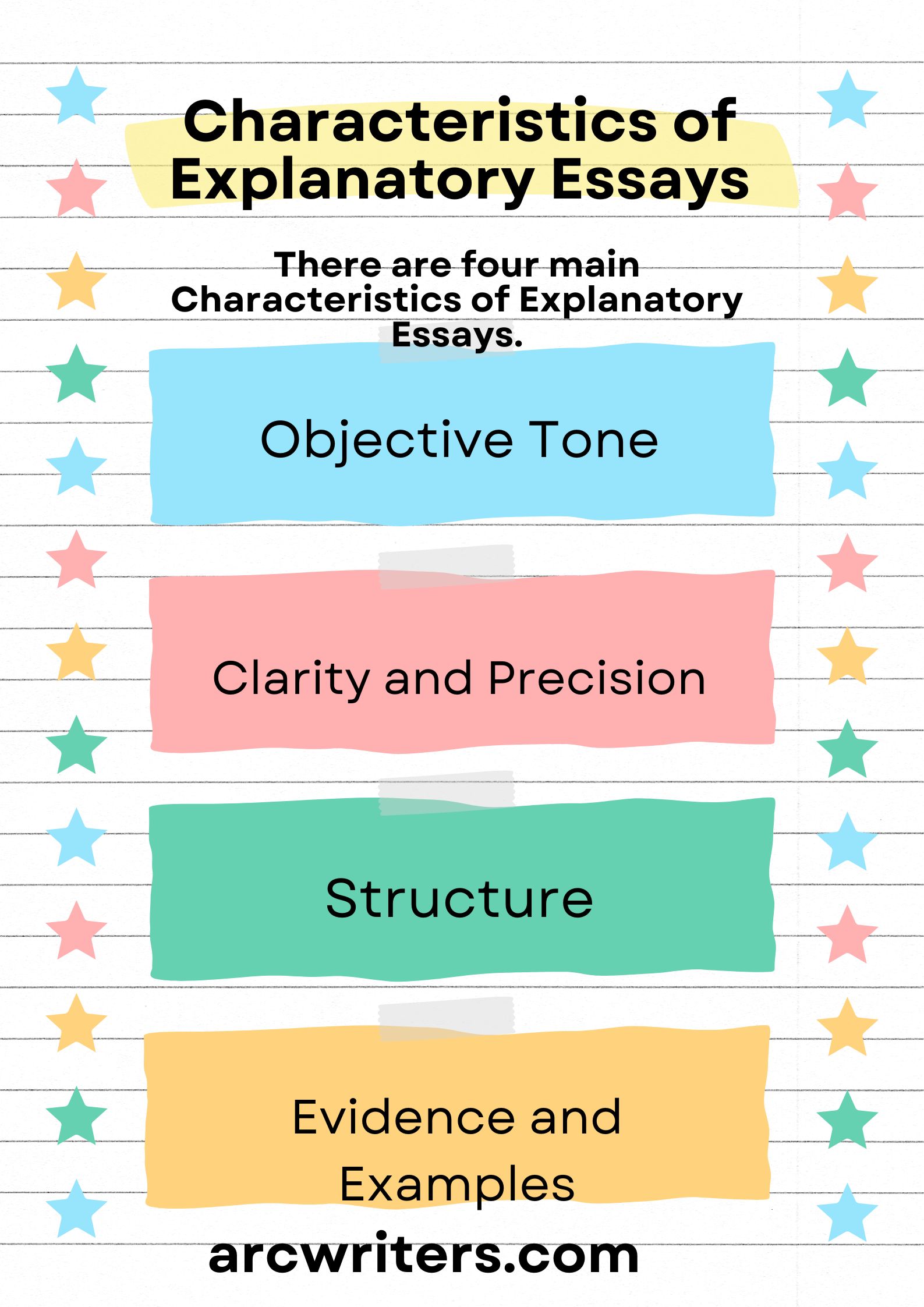
Characteristics
- Objective Tone: Explanatory essays maintain an objective tone devoid of personal bias or opinion. The focus remains on presenting factual information and providing clear explanations.
- Clarity and Precision: Clarity is paramount in explanatory writing. Writers must express ideas in a concise and understandable manner, avoiding ambiguity and confusion.
- Structure: Explanatory essays typically follow a standard structure comprising an introduction, body paragraphs, and a conclusion. This framework provides a logical flow and enhances readability.
- Evidence and Examples: Supporting evidence and relevant examples strengthen the credibility of explanatory essays. Incorporating data, statistics, anecdotes, and expert opinions enriches the content and reinforces key points.
Now, let’s delve into the step-by-step process of crafting the perfect explanatory essay:
Step 1: Pre-Writing Phase
Topic Selection
Selecting the right topic is a critical first step in crafting an effective explanatory essay. The process of topic selection involves careful consideration of various factors, including personal interests, audience relevance, and the availability of credible sources. It is essential to choose a topic that not only intrigues the writer but also resonates with the intended audience, ensuring engagement and relevance throughout the essay. Furthermore, the chosen topic should be sufficiently narrow to allow for in-depth exploration and analysis but broad enough to encompass meaningful insights and perspectives.
Conducting preliminary research can help in evaluating the feasibility and potential scope of different topics, allowing the writer to make an informed decision. Additionally, considering current events, emerging trends, or unresolved questions within a particular field can provide inspiration for selecting a timely and compelling topic. Ultimately, the key to successful topic selection lies in finding a balance between personal interest, audience relevance, and the potential for meaningful exploration and discovery.
Conduct Research
Conducting thorough research is an indispensable phase in the development of an explanatory essay, serving as the foundation upon which the essay’s credibility and depth are built. The research process involves gathering information from a variety of reputable sources, including academic journals, books, credible websites, and primary sources where applicable. By immersing oneself in the existing body of knowledge surrounding the chosen topic, the writer gains valuable insights, identifies key themes and arguments, and uncovers relevant evidence to support their analysis.
It is crucial to critically evaluate the reliability and validity of sources, considering factors such as author expertise, publication date, and peer review status. Additionally, synthesizing information from multiple sources allows the writer to construct a comprehensive understanding of the topic and identify gaps or areas warranting further exploration. Through meticulous research, the writer not only strengthens the foundation of their essay but also demonstrates intellectual rigor and integrity, enhancing the essay’s credibility and persuasiveness.
Step 2: Crafting the Introduction
Crafting the introduction of an explanatory essay is similar to laying the groundwork for a compelling intellectual journey, where the writer entices the reader with a tantalizing glimpse into the subject matter. The introduction serves as the gateway to the essay, capturing the reader’s attention, establishing the context, and outlining the scope of the discussion ahead. It begins with a hook—a captivating opening sentence or anecdote designed to intrigue and draw in the audience. Following the hook, the introduction provides necessary background information on the topic, offering essential context to orient readers and prepare them for the forthcoming exploration.
Additionally, the introduction presents the thesis statement—an overarching assertion that encapsulates the main argument or purpose of the essay. This thesis serves as a guiding beacon throughout the essay, directing the reader’s attention and framing the subsequent analysis. By crafting a compelling introduction, the writer sets the stage for a rich and engaging discourse, inviting readers to embark on a journey of discovery and enlightenment.
People Also Read:
How to Choose the Perfect Explanatory Essay Topics
What are the Essential Resources for Explanatory Essay Writing
Step 3: Developing the Body Paragraphs
Topic Sentences
Topic sentences serve as the anchor of each body paragraph within an explanatory essay, providing a clear and concise roadmap for the reader to navigate the ensuing discussion. As the first step in developing a body paragraph, crafting an effective topic sentence requires careful consideration of the main point or argument that the paragraph aims to convey. This sentence acts as a miniature thesis statement for the paragraph, covering its central idea and guiding the reader’s understanding of the subsequent content.
A well-crafted topic sentence not only introduces the topic or subtopic to be discussed but also establishes the direction and focus of the paragraph, ensuring cohesion and coherence within the essay’s overall structure. By clearly articulating the main point of the paragraph, topic sentences facilitate smooth transitions between ideas and provide readers with a roadmap for following the essay’s logical progression. As such, they play a pivotal role in shaping the clarity, organization, and persuasiveness of the essay’s argumentative framework.
Supporting Evidence
Following the establishment of a clear topic sentence, the next crucial step in developing a body paragraph within an explanatory essay is the inclusion of supporting evidence. This evidence serves as the backbone of the paragraph, providing substance and credibility to the argument or point being made. Supporting evidence can take various forms, including empirical data, statistics, expert opinions, textual references, and anecdotal examples, among others.
The choice of evidence depends on the nature of the topic and the specific claims being advanced. It is essential to select evidence that is relevant, reliable, and persuasive, as this will bolster the persuasiveness and credibility of the essay’s argument. Additionally, the inclusion of supporting evidence helps to substantiate the writer’s assertions, offering concrete proof to validate their claims and enhance the reader’s understanding of the topic. By weaving together a compelling tapestry of evidence, the writer reinforces the coherence and persuasiveness of their argument, ultimately contributing to the overall effectiveness and impact of the explanatory essay.
Explanation and Analysis
Once the supporting evidence has been introduced, the next crucial step in developing a body paragraph within an explanatory essay is providing thorough explanation and analysis. This phase involves unpacking the significance of the evidence presented and elucidating its relevance to the overall argument or topic. Explanation entails clarifying the meaning of the evidence, providing necessary context, definitions, and background information to ensure the reader’s comprehension. Following this, analysis involves a deeper examination of the evidence, probing its implications, connections, and underlying significance. Through critical analysis, the writer delves into the nuances of the evidence, examining patterns, relationships, and potential interpretations.
Additionally, the writer may explore the strengths and limitations of the evidence, considering alternative viewpoints or counterarguments to provide a well-rounded analysis. By offering a robust explanation and analysis of the evidence, the writer not only enhances the reader’s understanding but also strengthens the persuasiveness and depth of their argument. This process of explanation and analysis serves to illuminate the complexities of the topic, guiding readers towards a deeper and more nuanced comprehension of the subject matter at hand.
Transitions
In the development of a body paragraph within an explanatory essay, transitions play a pivotal role in ensuring coherence and fluidity between ideas. Following the thorough explanation and analysis of supporting evidence, transitions serve as bridges that seamlessly connect one idea to the next, guiding the reader through the logical progression of the argument. These transitions can take various forms, including transitional words and phrases, such as “furthermore,” “however,” or “in addition,” which signal shifts in thought or direction.
Additionally, transitions can also involve the repetition of key terms or concepts from the previous paragraph to establish continuity and reinforce connections between ideas. By incorporating effective transitions, the writer facilitates the smooth flow of information, allowing the reader to navigate the essay’s content with ease and clarity. Moreover, transitions serve to reinforce the coherence and unity of the essay’s overall structure, ensuring that each paragraph contributes seamlessly to the development and advancement of the central argument. Ultimately, transitions function as the glue that binds the various components of the essay together, guiding the reader on a cohesive and coherent journey of exploration and understanding.
Step 4. Writing Techniques and Style:
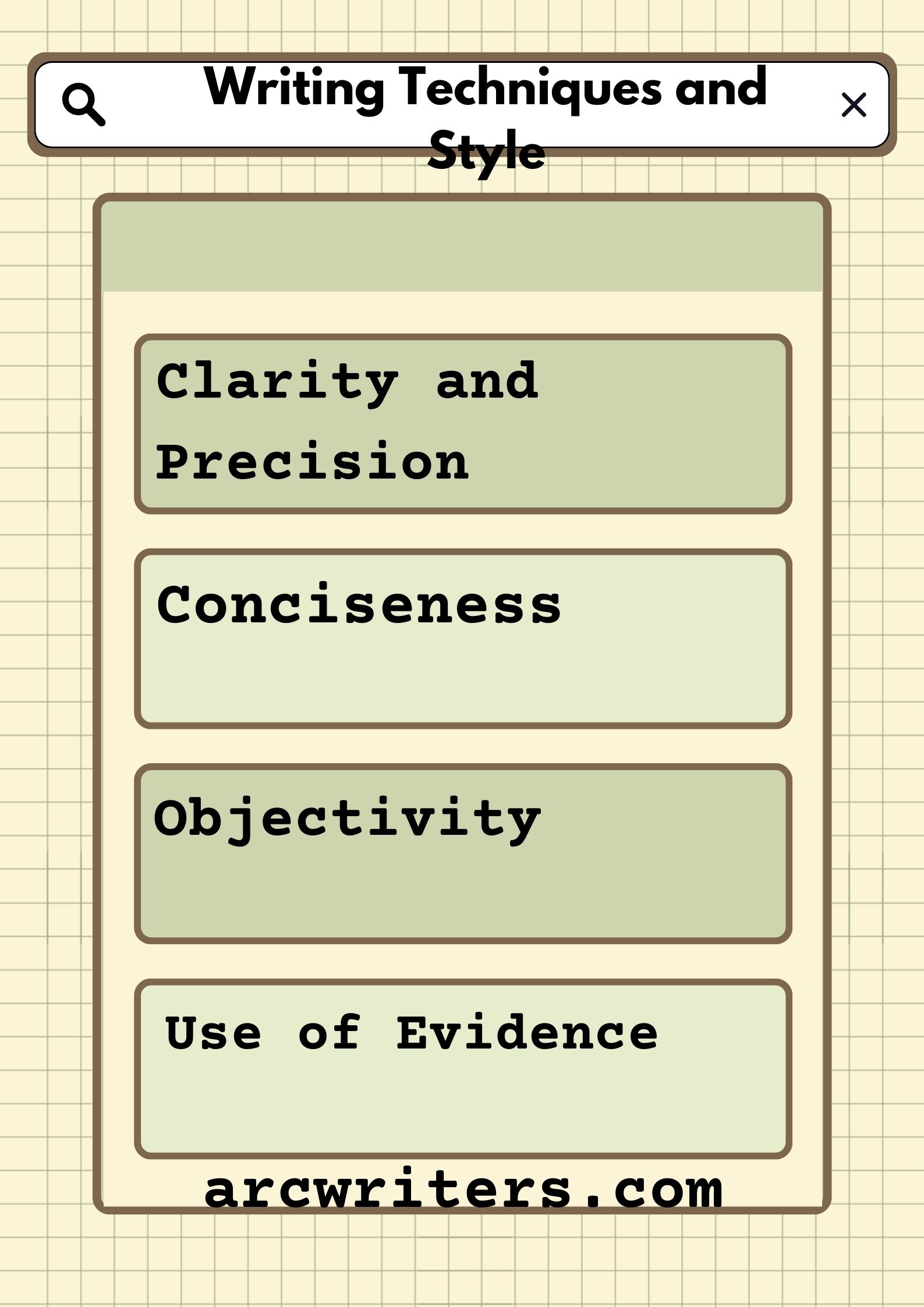
Writing Techniques and Style
4.1 Clarity and Precision:
Clarity and precision are paramount writing techniques and styles in crafting an effective explanatory essay. Achieving clarity involves presenting ideas, arguments, and evidence in a clear, straightforward manner, ensuring that readers can easily grasp the intended meaning without confusion or ambiguity. This entails using concise and precise language, avoiding unnecessary jargon or convoluted phrases that may obscure rather than elucidate. Precision, on the other hand, involves selecting words and phrases with exactness and accuracy, conveying the intended message with clarity and specificity. By striving for clarity and precision in writing, the author enhances the readability and comprehensibility of the essay, facilitating the reader’s understanding and engagement with the content.
This clarity and precision also lend credibility to the writer’s argument, demonstrating a mastery of the subject matter and an ability to communicate complex ideas effectively. In the context of an explanatory essay, where the goal is to elucidate and clarify intricate concepts or phenomena, clarity and precision serve as indispensable tools for conveying information with accuracy and impact, ultimately enhancing the persuasiveness and effectiveness of the essay as a whole.
4.2 Conciseness:
Conciseness is a fundamental writing technique and style in crafting an effective explanatory essay, characterized by the ability to convey information and ideas clearly and succinctly. In an explanatory essay, where the goal is to clarify complex concepts or phenomena, conciseness ensures that the message is communicated efficiently without unnecessary verbosity or repetition. By distilling ideas to their essence and eliminating superfluous details, conciseness allows the writer to maintain the reader’s attention and focus on the core arguments or explanations.
This concise writing style not only enhances the readability of the essay but also demonstrates the writer’s mastery of the subject matter and their ability to communicate complex ideas with precision and clarity. Moreover, conciseness helps to streamline the flow of the essay, ensuring that each paragraph contributes directly to the overall argument or explanation without straying off topic. By prioritizing clarity and brevity in their writing, authors can create explanatory essays that are both informative and engaging, leaving a lasting impression on their audience.
4.3 Objectivity:
Objectivity serves as a foundational writing technique and style in crafting a compelling explanatory essay, emphasizing the importance of presenting information and analysis without bias or personal opinion. In an explanatory essay, objectivity is essential for maintaining credibility and fostering trust with the reader. This entails presenting facts, evidence, and analysis in a fair and impartial manner, free from subjective interpretation or undue influence. By adopting an objective stance, the writer allows the evidence to speak for itself, empowering the reader to form their own conclusions based on the presented information.
Additionally, objectivity encourages critical thinking and intellectual engagement, as readers are encouraged to evaluate the evidence and draw their own informed judgments. In the context of an explanatory essay, where the goal is to provide clear and accurate explanations of complex topics or phenomena, objectivity ensures that the information presented is reliable and trustworthy, enhancing the essay’s credibility and persuasiveness. Ultimately, by prioritizing objectivity in their writing, authors can create explanatory essays that are not only informative and insightful but also credible and authoritative.
4.4 Use of Evidence:
The use of evidence is a cornerstone writing technique and style in crafting a persuasive explanatory essay, anchoring arguments and explanations in verifiable facts, data, and examples. In an explanatory essay, evidence serves as the backbone of the writer’s assertions, lending credibility and authority to their analysis. This evidence can take various forms, including empirical research, expert testimony, textual references, and anecdotal observations, among others. The key to effectively using evidence lies in selecting relevant, reliable sources that directly support the essay’s central thesis or main points.
Moreover, it is crucial to provide proper context and interpretation of the evidence, demonstrating its significance and relevance to the topic at hand. By incorporating evidence into their writing, authors can bolster the persuasiveness and depth of their arguments, compelling readers to engage critically with the material and arrive at their own informed conclusions. In essence, the judicious use of evidence not only strengthens the credibility of the explanatory essay but also enriches the reader’s understanding and appreciation of the subject matter.
Step 5: Writing the Conclusion
In crafting the conclusion of an explanatory essay, the writer brings the journey of exploration to a satisfying and insightful close, summarizing key points, reiterating the significance of the analysis, and leaving the reader with a lasting impression. The conclusion serves as the culmination of the essay’s argumentative framework, offering a synthesis of the main ideas and insights presented throughout the essay. It begins by restating the thesis statement, reminding the reader of the central argument or purpose of the essay. From there, the conclusion provides a concise summary of the main points discussed in the body paragraphs, highlighting the most salient findings and interpretations.
Additionally, the conclusion may offer reflections on the broader implications or significance of the topic, inviting readers to consider the broader context or relevance of the discussion. Finally, the conclusion concludes with a closing thought, leaving the reader with a sense of closure and prompting further reflection on the subject matter. By crafting a thoughtful and compelling conclusion, the writer reinforces the essay’s overarching message and leaves a lasting impact on the reader, ensuring that the essay resonates long after its conclusion.
Step 6: Revision and Editing
- Review for Clarity and Coherence: Read through your essay carefully to ensure clarity, coherence, and logical flow. Clarify any vague or ambiguous statements and strengthen weak arguments with additional evidence or analysis.
- Check for Consistency: Verify that your essay maintains a consistent tone, style, and voice throughout. Ensure that transitions between paragraphs are seamless and that all ideas are logically connected.
- Proofread for Grammar and Mechanics: Eliminate grammatical errors, punctuation mistakes, and spelling errors through thorough proofreading. Pay attention to sentence structure, word choice, and punctuation to enhance the overall readability of your essay.
- Seek Feedback: Consider seeking feedback from peers, instructors, or writing tutors to gain valuable insights and perspectives. Constructive criticism can help identify areas for improvement and refine your essay further.
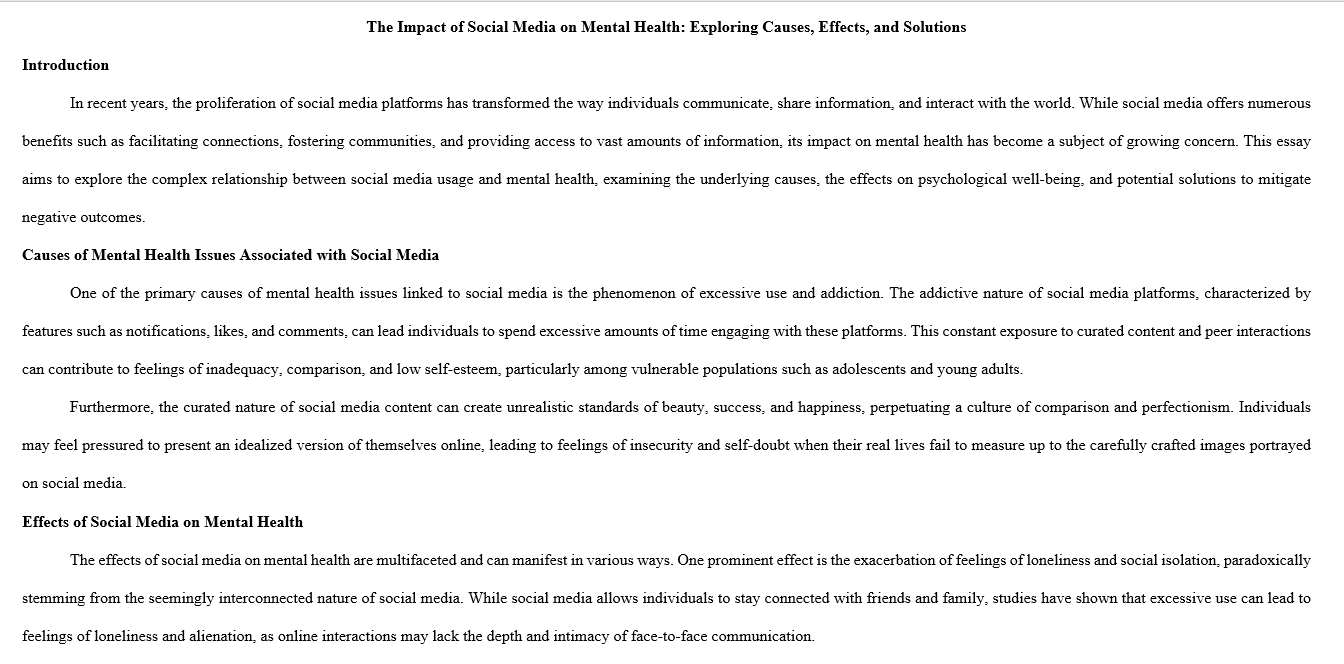
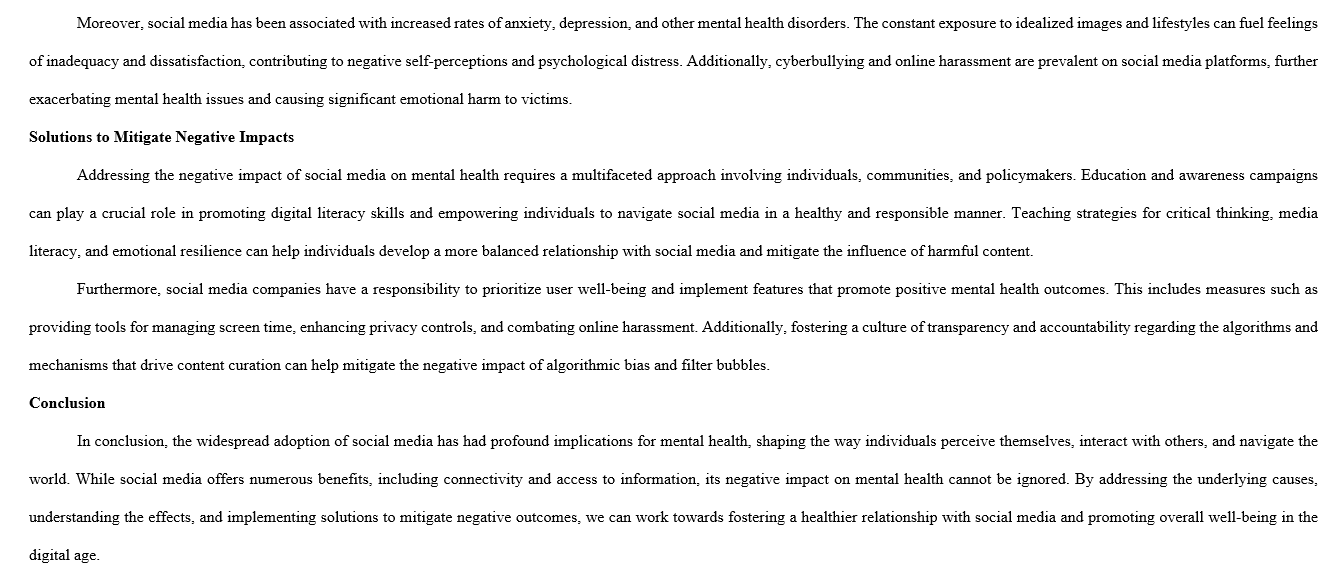
Explanatory Essay Example
Frequently Asked Questions
What are the key components and structure of explanatory essays
What are the Essential Tips for Writing skills and techniques for your Explanatory Essays
