
Introduction:
Narrative essays are a unique genre of writing that allows writers to express themselves creatively while also delivering a meaningful message or insight. Unlike other forms of writing, narrative essays focus on personal experiences, anecdotes, or stories to convey a particular theme or idea. Crafting a compelling narrative essay requires skillful storytelling, attention to detail, and an understanding of how to engage readers on an emotional level. In this essay, we will explore the key components and techniques for crafting narrative essays that captivate and resonate with audiences.
Narrative Essays
Understanding Narrative Essays:
Before Looking into the crafting process, it’s essential to understand what constitutes a narrative essay. At its core, a narrative essay tells a story from the author’s perspective, often drawing from personal experiences or observations. Unlike fictional narratives, which invent characters and events, narrative essays are grounded in reality, offering readers a glimpse into the author’s life or worldview. These essays aim to entertain, inform, or persuade, using the power of storytelling to convey a message or evoke emotions.
Purpose of Narrative Essay
Key Components of Narrative Essays:
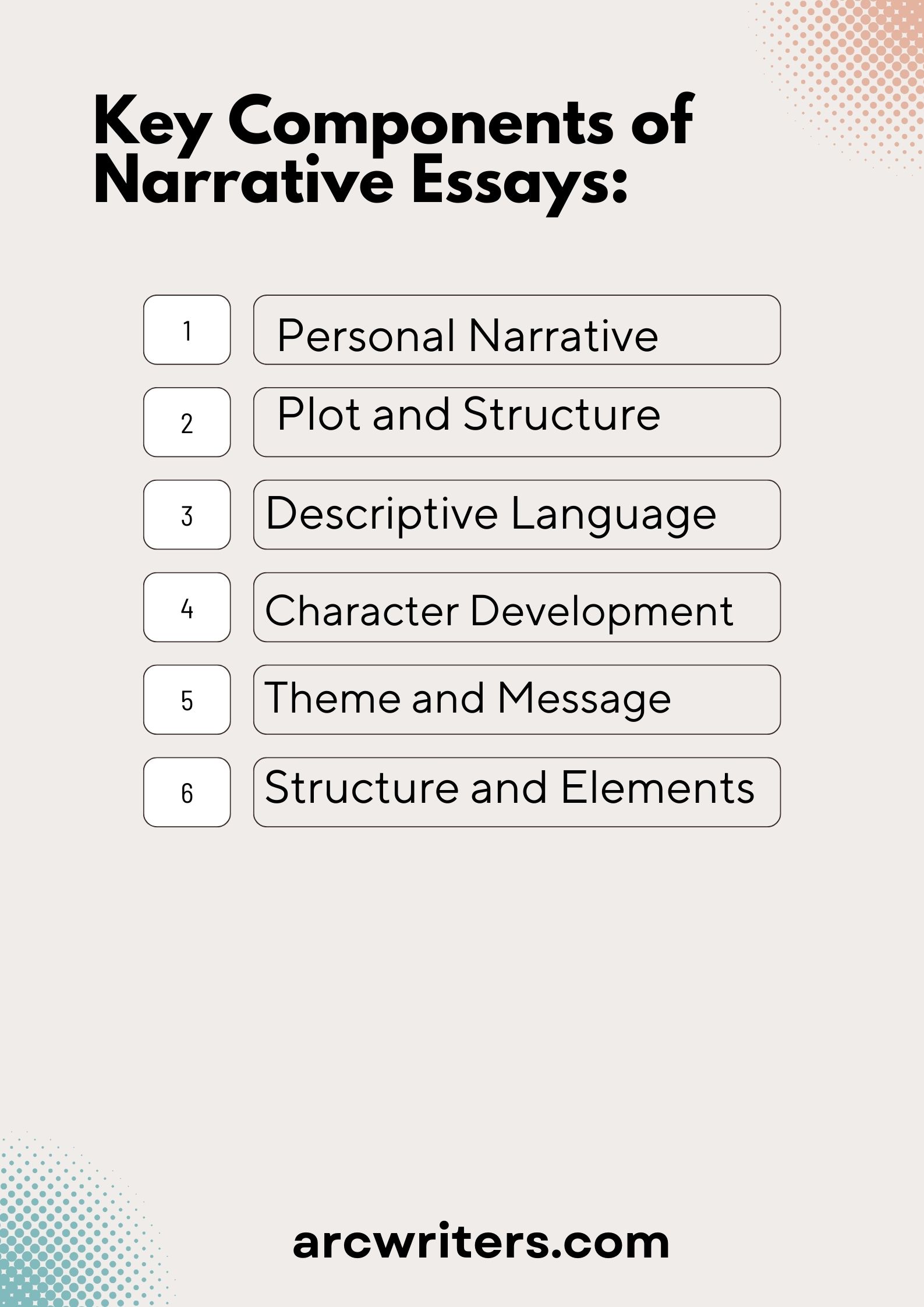
Key Components of Narrative Essays
Personal Narrative
Plot and Structure
Plot and structure are essential components of narrative essays, providing a framework for organizing the author’s experiences and guiding readers through the storytelling journey. Like any compelling narrative, a narrative essay should have a clear beginning, middle, and end to ensure coherence and flow. The plot outlines the sequence of events or experiences narrated in the essay, while the structure determines how these events are arranged and presented to the reader. While narrative essays don’t always adhere strictly to chronological order, transitions between events should be seamless to maintain the reader’s engagement.
Additionally, effective plot and structure allow for the gradual development of tension and resolution, keeping readers invested in the narrative’s outcome. By carefully crafting the plot and structure of a narrative essay, writers can create a cohesive and compelling narrative that resonates with readers long after they’ve reached the conclusion.
Descriptive Language
Character Development
Character development plays a pivotal role in narrative essays, enriching the storytelling by imbuing characters with depth, complexity, and authenticity. While narrative essays are rooted in real-life experiences, the individuals portrayed within them serve as conduits for conveying broader themes, emotions, and insights. Through thoughtful exploration of their personalities, motivations, and relationships, writers can create dynamic and relatable characters that resonate with readers on a profound level. By revealing the internal struggles, growth, and transformations of these characters, narrative essays offer readers a window into the human condition, fostering empathy and understanding.
Moreover, character development allows writers to explore the nuances of identity, culture, and society, shedding light on the complexities of the human experience. Whether portraying themselves or others, writers have the opportunity to breathe life into their characters through vivid descriptions, dialogue, and introspection, creating a more immersive and compelling narrative. Ultimately, character development serves as a key component of narrative essays, enriching the storytelling and providing readers with a deeper understanding of the themes and messages at its core.
Theme and Message
Techniques for Crafting Compelling Narrative Essays:
Start with a Strong Hook
Show, Don’t Tell
Develop Characters with Depth
Use Dialogue Effectively
Using dialogue effectively is a powerful technique for crafting compelling narrative essays, as it brings characters to life, advances the plot, and adds authenticity to the storytelling. Dialogue allows writers to showcase characters’ personalities, relationships, and conflicts through their interactions and conversations. By incorporating realistic dialogue that reflects the characters’ voices and experiences, writers can deepen readers’ understanding of their motivations and emotions.
Moreover, dialogue provides a dynamic way to reveal key information, convey subtext, and build tension within the narrative. Through well-crafted exchanges, writers can propel the story forward, heighten suspense, and engage readers on a deeper level. Additionally, dialogue offers readers a sense of immediacy and intimacy, immersing them in the scene and fostering a deeper connection with the characters and their journey. Whether through poignant exchanges, witty banter, or heartfelt conversations, using dialogue effectively enhances the richness and authenticity of narrative essays, making them more engaging and memorable for readers.
Create Tension and Conflict
Reflect and Provide Insight
Conclude with Impact
Examples of Compelling Narrative Essays:
- “The Joy of Reading and Writing: Superman and Me” by Sherman Alexie: In this essay, Alexie recounts his childhood love of reading and the transformative power of literature in his life. Through vivid anecdotes and personal reflections, he explores themes of identity, education, and cultural heritage.
- “The Fourth State of Matter” by Jo Ann Beard: Beard’s essay combines memoir with journalistic storytelling to recount a tragic shooting at the University of Iowa, weaving together personal experiences with broader reflections on loss, resilience, and the human condition.
- “Consider the Lobster” by David Foster Wallace: In this essay, Wallace takes readers on a thought-provoking journey to a lobster festival, using the event as a springboard to explore themes of ethics, consumerism, and the nature of consciousness.
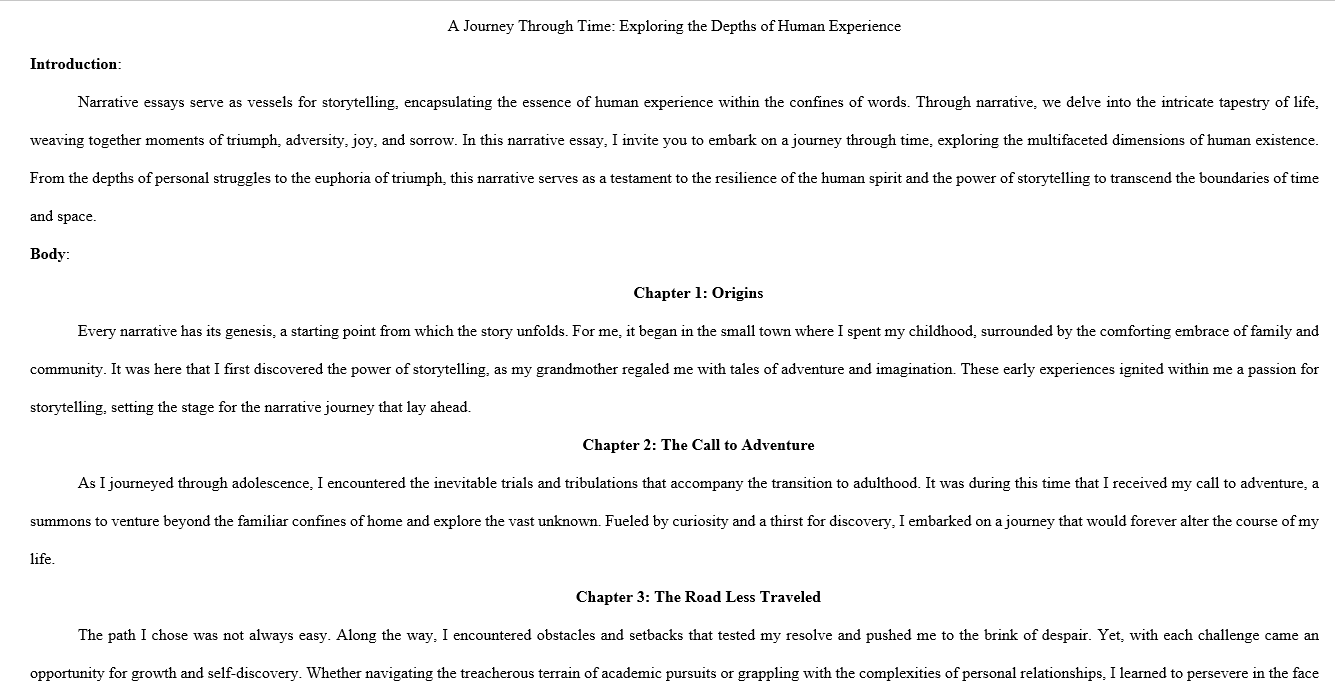
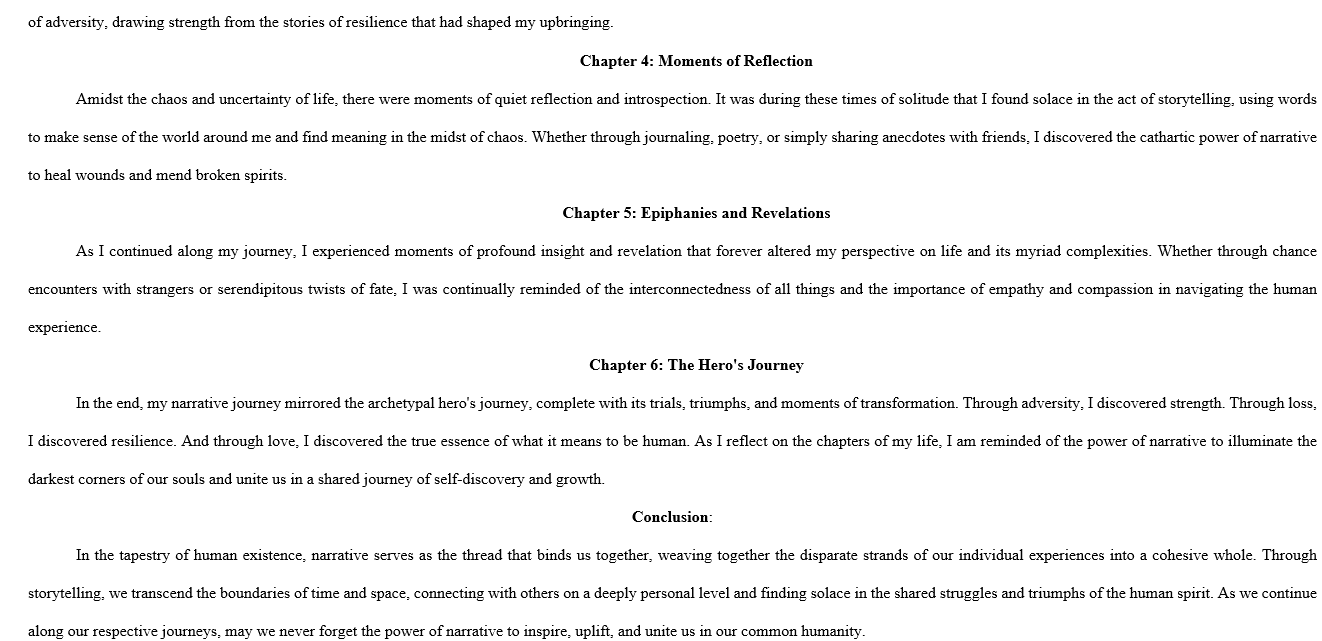
Narrative Essay Example
Frequently Asked Questions
What are key components and structure of a narrative essay
Powerful techniques and strategies to enhance the storytelling in your narrative essays
