
Introduction:
In the realm of college admissions, scholarships, and job applications, the personal statement stands as a pivotal document. It serves as a gateway for individuals to express their unique qualities, experiences, aspirations, and motivations. Crafting an effective personal statement requires more than just stringing together a list of achievements; it demands introspection, clarity of thought, and persuasive writing skills. This comprehensive guide will delve into the intricacies of creating a compelling personal statement, offering valuable insights and practical tips to help you shine amidst the competition.
Personal statement
Understanding the Purpose:
Before embarking on the journey of drafting a personal statement, it’s crucial to comprehend its purpose. Essentially, a personal statement provides an opportunity for applicants to showcase their personality, character, and suitability for a particular role or academic program. It allows admission officers or hiring managers to gain insights into your individuality beyond academic transcripts or resumes. Therefore, the primary goal is to convey a compelling narrative that leaves a lasting impression and highlights your potential contribution.
Key Elements of an Effective Personal Statement:
Authenticity
Clarity and Conciseness
Compelling Introduction
A compelling introduction serves as the gateway to an effective personal statement, capturing the reader’s attention and setting the tone for the narrative that follows. It is the applicant’s opportunity to make a memorable first impression, drawing the reader in with an engaging hook or opening statement that piques curiosity and generates interest. Whether through a vivid anecdote, a thought-provoking question, or a powerful statement of purpose, the introduction should immediately convey the significance of the applicant’s story and establish a compelling reason for the reader to continue reading.
By crafting an introduction that is both captivating and relevant to the overall theme of the personal statement, the applicant lays the groundwork for a cohesive and impactful narrative that resonates with the admissions committee. Additionally, a compelling introduction demonstrates the applicant’s ability to communicate effectively and command attention—a skill that is essential for success in academia and beyond.
Structured Narrative
Show, Don’t Tell
“Show, don’t tell” is a fundamental principle of crafting an effective personal statement, emphasizing the power of vivid storytelling and concrete examples to convey one’s qualities and experiences. Rather than simply stating characteristics or accomplishments outright, the applicant demonstrates them through descriptive narratives and specific instances. By painting a vivid picture with words, the applicant invites the reader into their world, allowing them to experience firsthand the challenges faced, the lessons learned, and the personal growth achieved.
Whether recounting a transformative volunteer experience, describing a pivotal moment of realization, or illustrating a passion through a memorable anecdote, showing rather than telling allows the applicant to connect with the reader on a deeper level, evoking emotions and creating a lasting impression. Through the artful use of imagery, sensory details, and compelling storytelling, the applicant breathes life into their personal statement, making it memorable, impactful, and persuasive to the admissions committee.
Self-Reflection
Self-reflection is a crucial element of an effective personal statement, offering insight into the applicant’s motivations, values, and aspirations. It involves introspection and thoughtful consideration of one’s experiences, strengths, and areas for growth. By engaging in self-reflection, the applicant gains a deeper understanding of themselves and their journey, which they can then articulate in their personal statement. Through honest self-assessment, the applicant can identify key moments of personal and academic development, reflecting on how these experiences have shaped their identity and influenced their goals.
Self-reflection also allows the applicant to convey authenticity and sincerity in their writing, as they share personal insights and perspectives that are uniquely their own. By demonstrating a capacity for self-awareness and introspection, the applicant not only showcases their readiness for the academic or professional challenges ahead but also presents themselves as a thoughtful and insightful individual deserving of consideration by the admissions committee.
Alignment with Goals
Alignment with goals is a pivotal element of an effective personal statement, emphasizing the coherence between the applicant’s past experiences, current aspirations, and future objectives. It involves articulating a clear and compelling narrative that demonstrates how the applicant’s background and interests converge with the goals of the program or opportunity they are applying for. By explicitly connecting their past achievements, academic pursuits, and extracurricular activities to their future career or academic goals, the applicant illustrates their commitment and suitability for the opportunity at hand.
Moreover, aligning personal goals with the mission and values of the institution or organization not only underscores the applicant’s understanding of the program but also highlights their potential to contribute meaningfully to its community. A well-aligned personal statement not only convinces the admissions committee of the applicant’s suitability for the program but also demonstrates foresight, ambition, and a sense of purpose, ultimately enhancing the applicant’s candidacy.
Conclusion with a Call to Action
A conclusion with a call to action serves as a crucial element of an effective personal statement, leaving a lasting impression on the reader and compelling them to take action. It offers the applicant an opportunity to reinforce their key points, summarize their main arguments, and reiterate their enthusiasm for the opportunity at hand. Additionally, a well-crafted conclusion provides closure to the narrative, offering reflection on the applicant’s journey and expressing gratitude for the reader’s time and consideration.
Furthermore, by including a call to action, such as expressing eagerness for an interview, reiterating interest in the program, or highlighting readiness to contribute to the institution, the applicant demonstrates proactive engagement and enthusiasm. This encourages the admissions committee to take the next steps in considering the applicant’s candidacy, thereby increasing the likelihood of a favorable outcome. In essence, a conclusion with a call to action not only leaves a strong final impression but also prompts the reader to envision the applicant as a valuable addition to their institution or organization.
Structuring Your Personal Statement:
Structuring Your Personal Statement
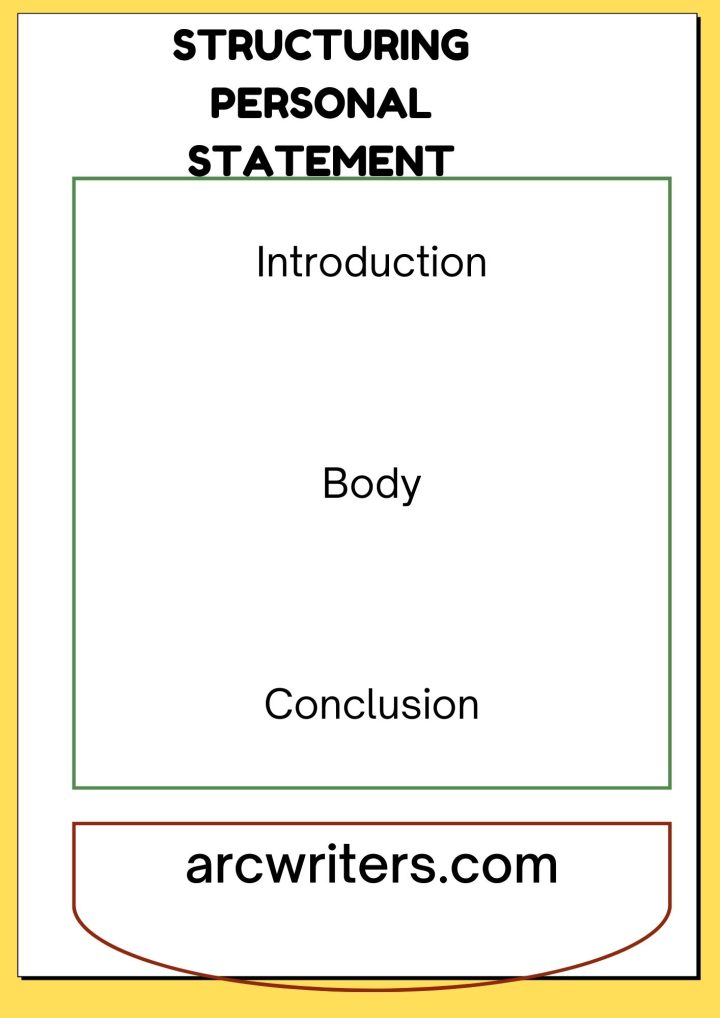
A well-structured personal statement is essential for maintaining coherence and guiding the reader through your narrative smoothly. While there is no one-size-fits-all structure, a typical personal statement follows a logical progression, starting with an engaging introduction, followed by the body paragraphs, and concluding with a strong closing statement.
- Introduction:
- Begin with a captivating hook or anecdote that grabs the reader’s attention.
- Clearly state the purpose of your personal statement and provide a brief overview of what the reader can expect.
- Introduce yourself and establish your voice and perspective from the outset.
- Body Paragraphs:
- Each body paragraph should focus on a distinct theme or aspect of your personal and academic journey.
- Provide specific examples, anecdotes, or experiences to illustrate your points.
- Showcase your achievements, skills, and qualities relevant to the program or position you’re applying for.
- Demonstrate self-reflection by discussing how your experiences have shaped your goals and aspirations.
- Ensure smooth transitions between paragraphs to maintain coherence and flow.
- Conclusion:
- Summarize the key points discussed in your personal statement.
- Reinforce your suitability for the program or position and your enthusiasm to contribute.
- End with a memorable closing statement that leaves a lasting impression on the reader.
People Also Read:
Proven Tips for Writing Personal Statements
How to write a Perfect College Personal Statement
Understanding the Difference: Statement of Purpose vs Personal Statement
Presentation and Formatting:
Presentation and formatting play a significant role in the overall impression your personal statement makes. Follow these guidelines to ensure your personal statement is visually appealing and professional:
- Use a Clear and Readable Font: Choose a standard font such as Times New Roman, Arial, or Calibri, and ensure it is easy to read. Use a font size between 10 and 12 points for optimal readability.
- Maintain Consistent Formatting: Use consistent formatting for headings, subheadings, and paragraphs throughout your personal statement. This helps maintain clarity and organization.
- Pay Attention to Length: Adhere to any word or page limits specified by the application guidelines. Avoid exceeding the maximum length, as this can detract from the impact of your personal statement.
- Use Proper Spacing and Margins: Ensure your personal statement is well-spaced with appropriate margins for readability. Use single or 1.5 line spacing and set one-inch margins on all sides of the document.
- Proofread the Final Version: Before submitting your personal statement, carefully review the final version for any formatting errors or inconsistencies. Pay attention to spacing, alignment, and indentation to ensure a polished appearance.
Aspects of writing an effective personal statement
Identifying Your Audience
Brainstorming and Outlining
Brainstorming
Brainstorming and outlining are crucial aspects of writing an effective personal statement, laying the foundation for a cohesive and compelling narrative. Before diving into the writing process, it’s essential to take the time to brainstorm ideas, reflecting on your experiences, strengths, and aspirations. Consider pivotal moments, significant challenges overcome, and achievements that have shaped your journey thus far.
Once you’ve generated a list of potential topics, outlining helps to organize your thoughts and structure your narrative in a logical sequence. Start by identifying the key points you want to convey, such as your motivations for pursuing the opportunity, your relevant experiences and accomplishments, and your future goals. Then, outline how you will develop each point, including specific examples and anecdotes to illustrate your key themes. By brainstorming and outlining before you start writing, you ensure that your personal statement is focused, coherent, and effectively communicates your unique story to the reader.
Crafting a Compelling Introduction
Crafting a compelling introduction is a crucial aspect of writing an effective personal statement, as it sets the tone for the entire narrative and captures the reader’s attention from the outset. An effective introduction should aim to grab the reader’s interest with a strong hook, such as an intriguing anecdote, a thought-provoking question, or a compelling statement that immediately draws them into your story. It should also establish the relevance and significance of your personal statement by clearly stating the purpose or central theme you will be exploring.
Additionally, your introduction should provide a glimpse into your personality and motivations, giving the reader a sense of who you are and what drives you. By crafting an introduction that is both engaging and informative, you create a compelling first impression that encourages the reader to continue reading and sets the stage for a memorable and impactful personal statement.
Showcasing Your Background and Experiences
Showcasing your background and experiences is a critical aspect of writing an effective personal statement, as it provides the foundation for conveying your unique qualifications and perspectives to the admissions committee or hiring panel. Begin by identifying the most relevant and impactful experiences from your academic, professional, and personal life that have shaped your journey and prepared you for the opportunity at hand.
Then, focus on selecting specific examples and anecdotes that highlight your skills, achievements, and growth over time. Whether it’s overcoming challenges, demonstrating leadership, or making significant contributions to your community, your goal is to paint a vivid picture of who you are and what you bring to the table. By showcasing your background and experiences in a compelling and authentic manner, you not only differentiate yourself from other candidates but also demonstrate your readiness and suitability for the opportunity you are pursuing.
Emphasizing Skills and Attributes
Articulating Your Goals and Ambitions
Demonstrating Fit and Alignment
Writing Style and Tone
Revising and Polishing Your Personal Statement
Practical Tips for Crafting Your Personal Statement:
- Start Early: Begin the writing process well in advance to allow ample time for brainstorming, drafting, and revisions. Rushing through your personal statement can compromise its quality and coherence.
- Tailor Each Statement: Customize your personal statement for each application, highlighting relevant experiences and skills that resonate with the specific requirements of the program or position. Avoid generic statements that could apply to any applicant.
- Seek Feedback: Solicit feedback from trusted mentors, teachers, or peers who can provide valuable insights and constructive criticism. Consider their perspectives and use them to refine your personal statement further.
- Revise and Edit Diligently: Revise your personal statement multiple times, paying attention to clarity, grammar, and punctuation. Eliminate any superfluous details or clichés that detract from the impact of your narrative.
- Stay True to Yourself: Maintain authenticity throughout the writing process, resisting the urge to conform to perceived expectations. Embrace your unique voice, perspectives, and experiences, as they are your greatest assets.
Essay Sample

Frequently Asked Questions
How to Write a Compelling Law School Personal Statements
How to write a Compelling Medical School Personal Statements
