
Introduction:
Embarking on the journey to pursue a Master of Business Administration (MBA) is a significant decision for any aspiring business professional. Among the essential components of your MBA application is the personal statement. This document serves as your opportunity to showcase your unique qualities, experiences, and aspirations to the admissions committee. Mastering the art of writing a compelling MBA personal statement requires careful planning, self-reflection, and effective communication skills. In this comprehensive guide, we will explore the key strategies and techniques to help you craft a standout MBA personal statement.
Understanding the Purpose:
Before delving into the writing process, it’s crucial to understand the purpose of the MBA personal statement. This document provides admissions committees with insights into your personality, motivations, and suitability for their program. It offers you a chance to go beyond your academic achievements and professional experiences, allowing you to demonstrate your potential as a future business leader. Your personal statement should convey your passion for business, your career goals, and how an MBA aligns with your aspirations.
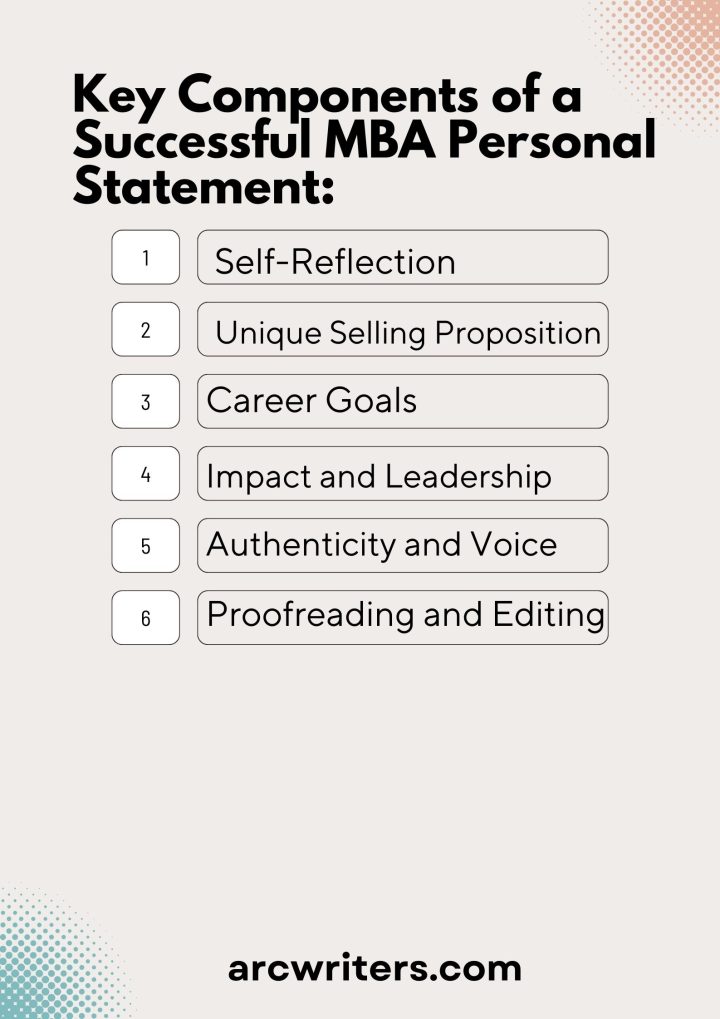
Key Components of a Successful MBA Personal Statement:
MBA Personal Statement
- Self-Reflection: Begin by reflecting on your personal and professional journey. What experiences have shaped your perspective on business? What motivates you to pursue an MBA? Reflect on your strengths, weaknesses, and areas of growth. Admissions committees seek candidates who are self-aware and capable of articulating their goals effectively.
- Unique Selling Proposition (USP): Identify your unique selling proposition – what sets you apart from other applicants? Whether it’s your diverse background, innovative ideas, or leadership qualities, highlight the qualities that make you a compelling candidate. Your USP should resonate throughout your personal statement, creating a memorable impression on the admissions committee.
- Career Goals: Clearly articulate your short-term and long-term career goals. How do you envision leveraging an MBA to advance your career? Be specific about the industry, role, and impact you aspire to achieve. Admissions committees seek candidates with clear direction and a strategic vision for their future.
- Fit with the Program: Demonstrate your understanding of the MBA program and its unique offerings. Research the curriculum, faculty, and extracurricular opportunities that align with your interests and goals. Discuss how your background and aspirations align with the values and culture of the program. Admissions committees seek candidates who have a genuine interest in their institution and can contribute meaningfully to the community.
- Impact and Leadership: Highlight your past achievements and leadership experiences. Whether it’s leading a team, initiating a project, or driving change within your organization, showcase instances where you demonstrated initiative, resilience, and impact. Admissions committees seek candidates who have a track record of success and the potential to make a positive difference in their future endeavors.
- Authenticity and Voice: Be authentic and let your personality shine through your writing. Avoid using clichés or overly formal language. Instead, write in a clear, concise, and engaging manner. Your personal statement should reflect your voice and passion for business, leaving a lasting impression on the admissions committee.
- Proofreading and Editing: Take the time to review and revise your personal statement carefully. Check for grammar, spelling, and punctuation errors. Ensure that your writing flows smoothly and effectively communicates your ideas. Consider seeking feedback from mentors, peers, or professional editors to ensure that your personal statement is polished and impactful.
Sample Outline for MBA Personal Statement:
I. Introduction
- Grab the reader’s attention with a compelling opening statement.
- Introduce yourself and provide context for your interest in pursuing an MBA.
II. Background and Experiences
- Share relevant personal and professional experiences that have influenced your decision to pursue an MBA.
- Highlight key achievements, challenges, and lessons learned.
III. Career Goals
- Clearly articulate your short-term and long-term career goals.
- Explain how an MBA aligns with your aspirations and will help you achieve your objectives.
IV. Fit with the Program
- Discuss why you are interested in the specific MBA program and how it aligns with your goals.
- Highlight aspects of the program that resonate with your interests and values.
V. Leadership and Impact
- Provide examples of leadership experiences and accomplishments.
- Demonstrate your ability to drive change and make a positive impact in your professional and personal endeavors.
VI. Conclusion
- Summarize your key points and reiterate your enthusiasm for pursuing an MBA.
- End with a strong closing statement that leaves a lasting impression on the reader.
Conclusion:
Mastering the art of writing a compelling MBA personal statement is essential for standing out in the competitive admissions process. By following the strategies outlined in this guide and leveraging your unique experiences and aspirations, you can create a personal statement that resonates with admissions committees and showcases your potential as a future business leader. Remember to be authentic, strategic, and reflective in your writing, and you’ll be well on your way to success in your MBA application journey.
