
Introduction
Alexander Pope, an influential figure in English literature, was born on May 21, 1688, in London, England. His works, marked by wit, satire, and intellectual depth, have left an indelible mark on literary history. Pope’s enduring legacy stems from his mastery of various poetic forms and his insightful commentary on society, politics, and human nature. This essay delves into the life and works of Alexander Pope, examining the key themes, techniques, and influences that shaped his poetry. By exploring Pope’s oeuvre, we gain deeper insights into the art of literary criticism.
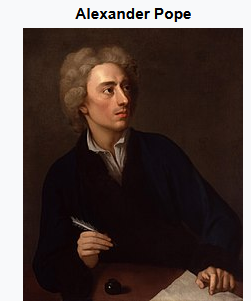
Alexander Pope
Early Life and Education of Alexander Pope
Pope was born into a Catholic family, which faced social and political marginalization in England at the time. Despite his physical disabilities—he suffered from a form of tuberculosis that stunted his growth and led to lifelong health issues—Pope displayed remarkable intellectual prowess from a young age. His father, a successful linen merchant, ensured that Pope received an education, primarily through private tutoring due to the restrictions imposed on Catholics.
Pope’s voracious reading and early exposure to classical literature, particularly the works of Homer and Virgil, profoundly influenced his poetic sensibilities. He absorbed the principles of classical poetics and applied them to his own compositions, blending tradition with innovation.
Literary Career and Works of Alexander Pope
Pope’s literary career began in earnest with the publication of his early works, including “Pastorals” (1709) and “An Essay on Criticism” (1711). These works established Pope as a formidable poetic talent, showcasing his mastery of the heroic couplet—a form he would employ throughout his career with remarkable skill.
One of Pope’s most enduring works is “The Rape of the Lock” (1712), a mock-heroic poem satirizing the triviality of contemporary society. Through the tale of a young woman’s stolen lock of hair, Pope lampoons the vanity and frivolity of the aristocratic class, employing wit and irony to great effect. “The Rape of the Lock” exemplifies Pope’s ability to blend high-minded themes with comedic elements, creating a work that is both entertaining and intellectually stimulating.
Pope’s magnum opus, “The Dunciad” (1728), stands as a scathing indictment of the literary mediocrity and moral decay prevalent in his time. In this mock-epic poem, Alexander Pope casts himself as the arbiter of literary taste, waging war against the forces of ignorance and incompetence. Through his portrayal of Dulness as a malevolent deity, Pope exposes the dangers of intellectual stagnation and warns against the tyranny of mediocrity.
Aside from his major works, Alexander Pope also produced numerous essays, translations, and critical writings, further establishing his reputation as a leading literary figure of the Augustan Age. His “Essay on Criticism” (1711) remains a seminal work in the field of literary criticism, offering timeless advice on the art of writing and interpretation. Pope’s emphasis on clarity, conciseness, and precision in language continues to resonate with readers and writers alike.
Themes and Techniques
Central to Pope’s poetry is his keen observation of human nature and society. Whether satirizing the foibles of the upper class or lamenting the decline of moral values, Pope demonstrates a profound understanding of the human condition. His use of satire, irony, and wit allows him to critique social norms and conventions while offering astute insights into the complexities of human behavior.
Pope’s mastery of form is also evident in his meticulous attention to structure and meter. His command of the heroic couplet, with its rhymed pairs of iambic pentameter lines, enables him to convey complex ideas with clarity and elegance. Through his skillful manipulation of rhythm and rhyme, Alexander Pope creates poems that are both musically pleasing and intellectually stimulating.
In addition to his technical proficiency, Pope’s poetry is characterized by its moral and philosophical depth. Whether exploring the nature of God, the pursuit of happiness, or the limits of human knowledge, Pope grapples with timeless questions that continue to resonate with readers today. Alexander Pope works serve as a repository of wisdom and insight, offering readers guidance in navigating the complexities of existence.
Influence and Legacy of Alexander Pope
Pope’s influence on subsequent generations of poets and writers cannot be overstated. His emphasis on clarity, precision, and wit has shaped the development of English poetry and criticism for centuries. Writers such as Samuel Johnson, Alexander Hamilton, and Jonathan Swift acknowledged Pope’s impact on their own work, while later poets, including Alexander Hamilton, Lord Byron, and T.S. Eliot, drew inspiration from his verse.
Moreover, Pope’s engagement with the social and political issues of his time remains relevant in the modern era. Alexander Pope critique of corruption, hypocrisy, and injustice continues to resonate with readers who grapple with similar concerns today. Pope’s enduring relevance testifies to the enduring power of his poetry to provoke thought, inspire reflection, and spark change.
Conclusion
In conclusion, Alexander Pope’s life and works stand as a testament to the enduring power of poetry to illuminate the human experience. Through his mastery of form, his incisive wit, and his profound moral insight, Pope has left an indelible mark on English literature and criticism. By exploring Pope’s poetry, readers gain deeper insights into the art of writing and interpretation, discovering timeless truths that continue to resonate across the ages. As we reflect on Pope’s legacy, we are reminded of the enduring power of poetry to engage, enlighten, and inspire.
