
Introduction:
In the sector of healthcare, nursing interventions play a pivotal role in ensuring the well-being and recovery of patients. Specifically, in adult nursing, interventions are multifaceted and tailored to address the diverse needs of individuals across various health conditions and settings. Effective adult nursing interventions encompass a spectrum of actions aimed at promoting health, preventing illness, and managing acute or chronic conditions. This comprehensive approach requires a combination of clinical expertise, evidence-based practice, and holistic patient-centered care. In this essay, we delve into the significance of effective adult nursing interventions, exploring key strategies, challenges, and the impact on patient outcomes.
Understanding Adult Nursing Interventions:
Adult nursing interventions encompass a broad range of activities designed to meet the physical, emotional, and psychological needs of adult patients. These interventions are informed by nursing theories, clinical guidelines, and evidence-based practices, emphasizing a patient-centered approach that respects individual autonomy and dignity. Key components of effective adult nursing interventions include:
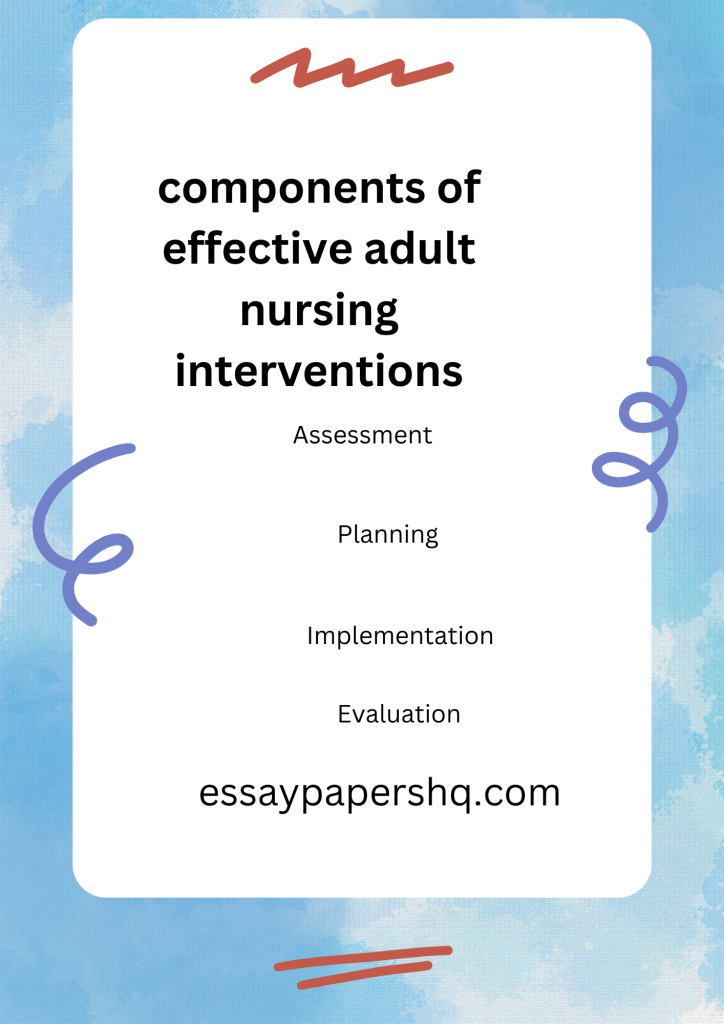
- Assessment: Thorough assessment is the cornerstone of nursing practice, providing the foundation for personalized interventions. Nurses gather data on patients’ medical history, current health status, socio-economic factors, and psychosocial needs to identify potential risks and develop tailored care plans.
- Planning: Based on assessment findings, nurses collaborate with patients, families, and interdisciplinary teams to establish goals and prioritize interventions. Care plans outline specific actions, timelines, and measurable outcomes, ensuring continuity of care and effective communication among healthcare providers.
- Implementation: Nursing interventions are implemented with precision and compassion, taking into account patients’ preferences, cultural beliefs, and individualized care needs. Nurses administer medications, perform treatments, educate patients about self-care practices, and provide emotional support to promote healing and optimize health outcomes.
- Evaluation: Ongoing evaluation is essential to assess the effectiveness of nursing interventions and make necessary adjustments to the care plan. Nurses monitor patients’ responses to treatment, evaluate outcomes against established goals, and engage in reflective practice to enhance the quality of care delivery.
Effective Strategies in Adult Nursing Interventions:
To enhance the effectiveness of nursing interventions in adult care, several strategies can be employed:
- Evidence-Based Practice: Nurses should utilize the latest evidence from research and clinical guidelines to inform their practice. By staying abreast of current literature and incorporating best practices into care delivery, nurses can optimize patient outcomes and promote quality improvement initiatives.
- Patient Education: Empowering patients with knowledge about their health conditions, treatment options, and self-management strategies is essential for promoting adherence and fostering autonomy. Nurses play a key role in providing education, counseling, and resources to support patients in making informed decisions about their care.
- Multidisciplinary Collaboration: Collaboration among healthcare professionals enhances the coordination and effectiveness of interventions. Nurses collaborate with physicians, therapists, social workers, and other members of the healthcare team to address the complex needs of adult patients comprehensively.
- Holistic Assessment: Recognizing the interconnectedness of physical, emotional, and social factors in health, nurses conduct holistic assessments that encompass the biopsychosocial dimensions of care. By considering the whole person and their unique circumstances, nurses can tailor interventions to promote holistic well-being.
- Communication Skills: Effective communication is fundamental to nursing practice, enabling nurses to establish therapeutic relationships, facilitate shared decision-making, and advocate for patients’ needs. Clear, empathetic communication fosters trust and enhances patient satisfaction with care.
Challenges in Implementing Effective Adult Nursing Interventions:
Despite the importance of effective nursing interventions, several challenges may hinder their implementation:
- Time Constraints: Nurses often face time constraints due to heavy workloads, staffing shortages, and administrative tasks, which may limit the amount of time available for direct patient care and comprehensive interventions.
- Resource Limitations: Limited access to resources such as equipment, medications, and specialized services can impede nurses’ ability to deliver optimal care and may necessitate creative problem-solving to meet patients’ needs within constraints.
- Complex Patient Needs: Adult patients present with diverse and complex health needs, requiring nurses to possess advanced clinical skills, critical thinking abilities, and cultural competence to address multifaceted issues effectively.
- Resistance to Change: Resistance to change within healthcare organizations or among staff members may pose challenges to implementing new interventions or adopting evidence-based practices, necessitating leadership support and staff education initiatives.
Impact of Effective Adult Nursing Interventions on Patient Outcomes:
Effective adult nursing interventions have a profound impact on patient outcomes across the continuum of care:
- Improved Health Outcomes: By delivering timely and appropriate interventions, nurses contribute to improved patient outcomes such as symptom management, disease prevention, and enhanced functional status.
- Enhanced Patient Satisfaction: Patient-centered care approaches that prioritize individual preferences, values, and needs result in higher levels of patient satisfaction and engagement in their care.
- Reduced Healthcare Costs: By preventing complications, minimizing hospital readmissions, and promoting adherence to treatment plans, effective nursing interventions contribute to cost savings for healthcare systems and payers.
- Enhanced Quality of Life: Nursing interventions that address patients’ physical, emotional, and psychosocial needs contribute to enhanced quality of life and overall well-being for adult patients and their families.
Conclusion:
Effective adult nursing interventions are essential for promoting positive patient outcomes, improving quality of care, and optimizing healthcare delivery. By employing evidence-based practices, fostering collaboration, and addressing the holistic needs of patients, nurses play a critical role in enhancing the health and well-being of adult populations. Despite challenges such as resource constraints and complex patient needs, the dedication and expertise of nurses contribute to the provision of high-quality, patient-centered care that is essential in today’s healthcare landscape. As advocates, educators, and caregivers, nurses continue to uphold the principles of compassion, competence, and professionalism in their practice, ensuring that adults receive the best possible care to support their health and recovery journey.