
Introduction
The conclusion of a compare and contrast paper is not just a mere summary; it is the final opportunity to leave a lasting impression on your reader. A well-crafted conclusion should not only restate the main points but also provide closure and offer insights that resonate with the reader. In this comprehensive guide, we will delve into the intricacies of crafting a memorable and impactful conclusion for your compare and contrast paper.
Understanding the Purpose of the Conclusion
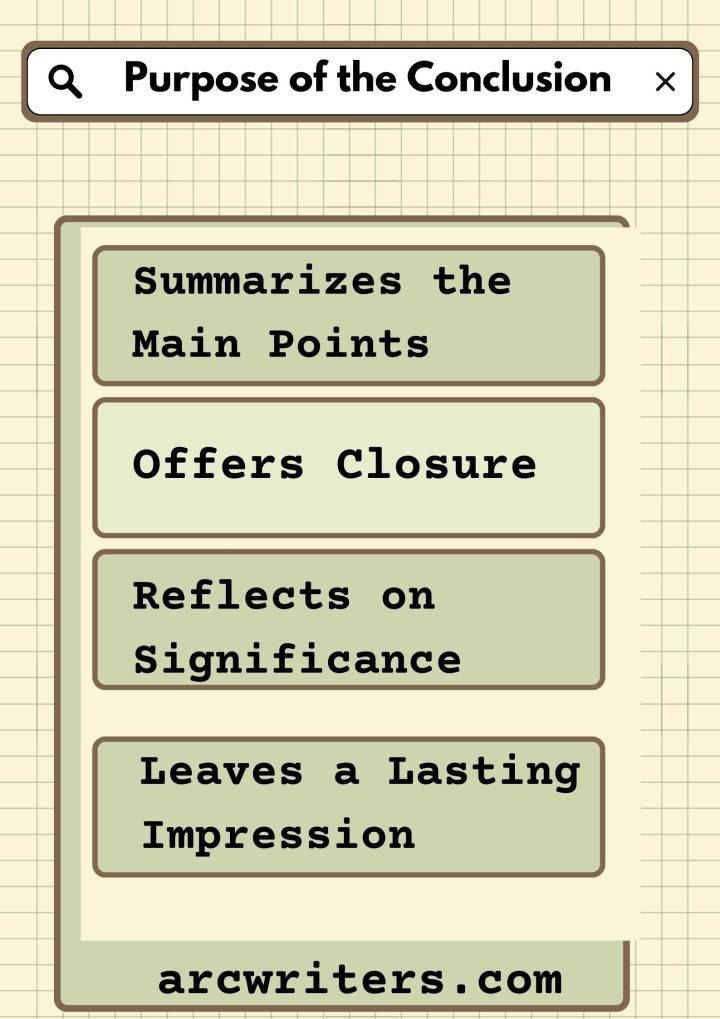
Purpose of the Conclusion
Before diving into the specifics of crafting a ending, it’s essential to understand its purpose. The conclusion serves several vital functions:
- Summarizes the Main Points: It briefly recaps the key arguments and findings presented in the paper.
- Offers Closure: It provides a sense of closure to the reader by tying up loose ends and bringing the discussion to a satisfying end.
- Reflects on Significance: It reflects on the significance of the comparison and contrast, highlighting broader implications or lessons learned.
- Leaves a Lasting Impression: It leaves the reader with a memorable takeaway that reinforces the paper’s main message.
Now, let’s explore the steps to craft a conclusion that achieves these objectives effectively.
- Restate the Thesis Statement: Begin your conclusion by restating the thesis statement in a rephrased manner. This reaffirms the central argument of your paper and reminds the reader of the purpose of the comparison and contrast. However, avoid simply copying and pasting the original thesis; instead, rephrase it to provide a fresh perspective.
- Summarize Key Points: Provide a concise summary of the main points discussed in the body paragraphs. Highlight the similarities and differences identified in your comparison and contrast analysis. Use clear and concise language to ensure that the summary is easy to follow for the reader.
- Emphasize Significance: Next, emphasize the significance of your findings. Explain why the comparison and contrast are relevant and meaningful. Consider the broader implications of your analysis and how it contributes to the existing body of knowledge on the topic. This demonstrates the importance of your work and adds depth to your ending.
- Offer Insights: Offer insights or lessons learned from the comparison and contrast. Discuss any patterns or trends that emerged during your analysis and what they reveal about the subjects being compared. This not only adds value to your ending but also engages the reader by providing new perspectives.
- Make a Thoughtful Closing Statement: End your conclusion with a thoughtful closing statement that leaves a lasting impression. This could be a thought-provoking question, a call to action, or a reflection on the broader implications of your findings. Whatever approach you choose, ensure that it reinforces the main message of your paper and resonates with the reader.
- Avoid Introducing New Information: Remember to avoid introducing new information or arguments in the conclusion. The ending should focus on summarizing and synthesizing the existing content rather than introducing new ideas. Introducing new information at this stage can confuse the reader and undermine the coherence of your paper.
- Maintain Consistency with Tone and Style: Ensure that the tone and style of your ending are consistent with the rest of your paper. If your paper has been formal and academic in tone, maintain that tone in the ending. Similarly, if your paper has employed a more informal or narrative style, continue with that approach in the ending. Consistency is key to ensuring that your ending feels cohesive and integrated with the rest of your paper.
- Revise and Edit: Finally, don’t forget to revise and edit your conclusion carefully. Pay attention to clarity, coherence, and grammar. Eliminate any unnecessary repetition or wordiness. Consider seeking feedback from peers or instructors to ensure that your ending effectively achieves its intended purpose.
Example Conclusion
To illustrate these principles in action, let’s consider an example conclusion for a compare and contrast paper comparing two literary works:
“In conclusion, the comparison of Jane Austen’s ‘Pride and Prejudice’ and Charlotte Brontë’s ‘Jane Eyre’ reveals fascinating insights into the portrayal of women in nineteenth-century English literature. While both novels feature strong female protagonists who defy societal norms, they do so in markedly different ways. ‘Pride and Prejudice’ emphasizes the importance of social status and marriage for women’s autonomy, whereas ‘Jane Eyre’ champions individuality and self-determination. Despite these differences, both novels offer timeless lessons about the complexities of love, identity, and societal expectations. As readers, we are reminded of the enduring relevance of these themes and the power of literature to challenge and inspire us. In a world that continues to grapple with issues of gender equality and self-expression, the lessons of Austen and Brontë remain as poignant and relevant as ever.”
Conclusion
Crafting a memorable and impactful conclusion for your compare and contrast paper requires careful attention to detail and a thoughtful approach. By restating the thesis, summarizing key points, emphasizing significance, offering insights, making a thoughtful closing statement, and maintaining consistency with tone and style, you can create a ending that leaves a lasting impression on your reader. Remember to revise and edit your ending thoroughly to ensure clarity and coherence. With these strategies in mind, you can effectively conclude your compare and contrast paper on a high note, leaving your reader with a sense of satisfaction and enlightenment.
